
You’ve picked the right ceiling fan, but you’re not sure what an electrician will charge to fit it. For a standard swap, you’ll usually pay £100 to £250 in labour.
That figure can shift quickly, though.
Your ceiling height, existing wiring and mounting needs all play a part. Some jobs take an hour. Others need new cables, extra support or special equipment.
So what will your installation actually cost?
General guidance only. Electrical work can be dangerous; if in doubt, use a qualified electrician. Read the disclaimer
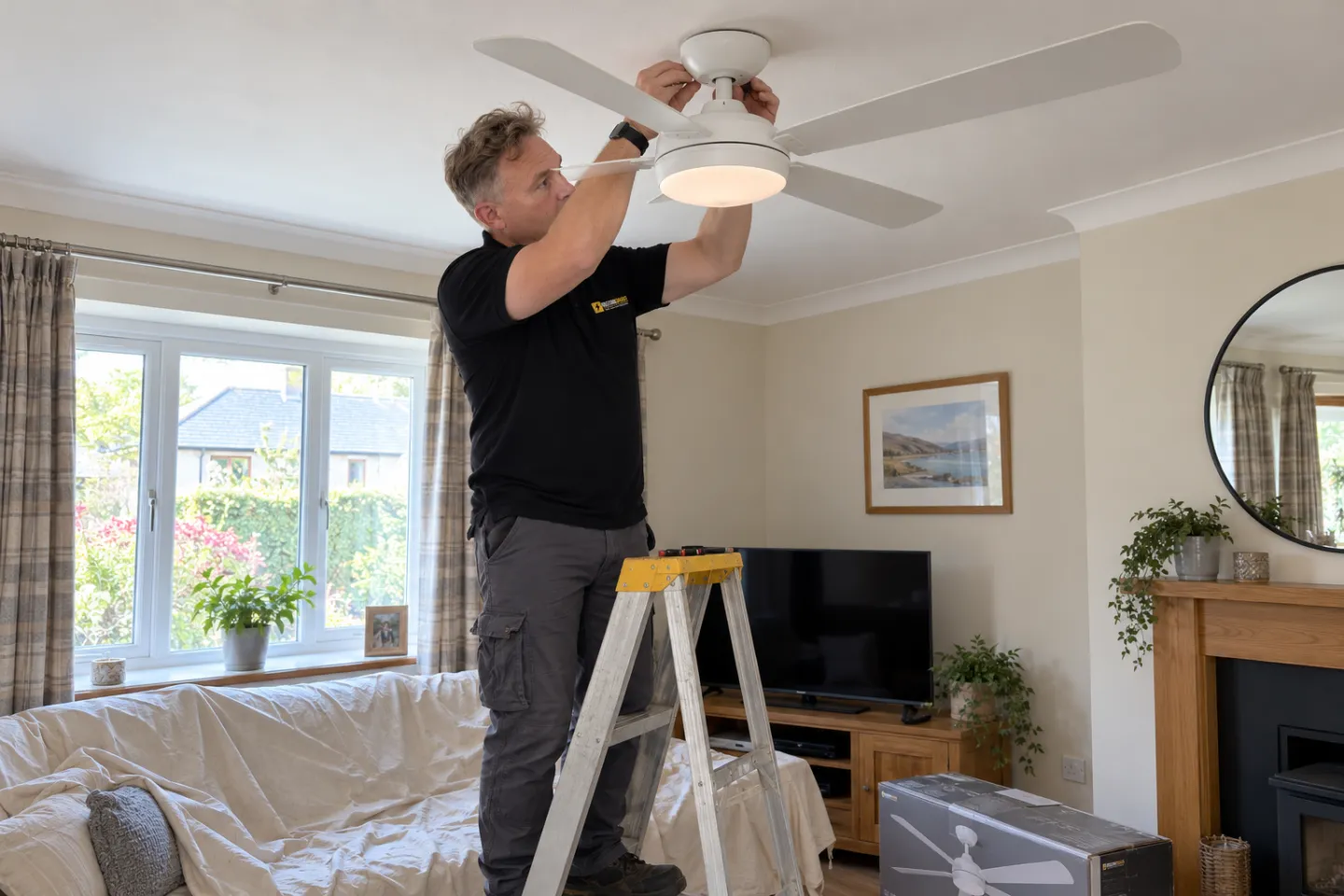
Labour costs for a qualified electrician to install a ceiling fan typically range between £100 and £250 for a standard replacement
Most qualified electricians charge between £100 and £250 to install a ceiling fan when they’re replacing an existing light fitting or fan. This price covers the job because the wiring, ceiling box and switch are already in place, so your electrician won’t need to run new cables or cut into plaster.
Most standard replacements take two to three hours, including removing the old fitting, securing a fan-rated bracket, connecting the wiring and testing the fan.
Where you live affects what you’ll pay. Electricians in London and the South East often charge £50 to £80 per hour, while you’ll typically pay £40 to £60 elsewhere. Some electricians quote a fixed price, while others add a call-out fee of £30 to £60.
Expect costs to climb toward the higher end if you’ve got high ceilings, a heavy fan or a model with remote controls. Compare three written quotes first.

Electricians generally charge an hourly rate of £40 to £60, usually subject to a minimum call-out charge of £50 to £80 covering the first hour
When you book an electrician by the hour, you’ll usually pay £40 to £60 for each hour they spend on the job. Most electricians also apply a minimum call-out charge of £50 to £80, which covers the first hour of work.
You’ll pay this fee even if the job takes less time, so a quick swap of an existing fitting won’t cost much less than the minimum.
Once the first hour ends, the standard hourly rate applies, and many electricians bill in half-hour increments. A straightforward ceiling fan replacement usually takes two to three hours, so you can expect to pay roughly £90 to £200 in labour.
Rates rise in London and the South East, and you’ll often pay more for evening, weekend, or emergency visits. Before you book anyone, ask whether the quote includes travel, VAT, and parts, so you can compare electricians fairly and avoid surprises.
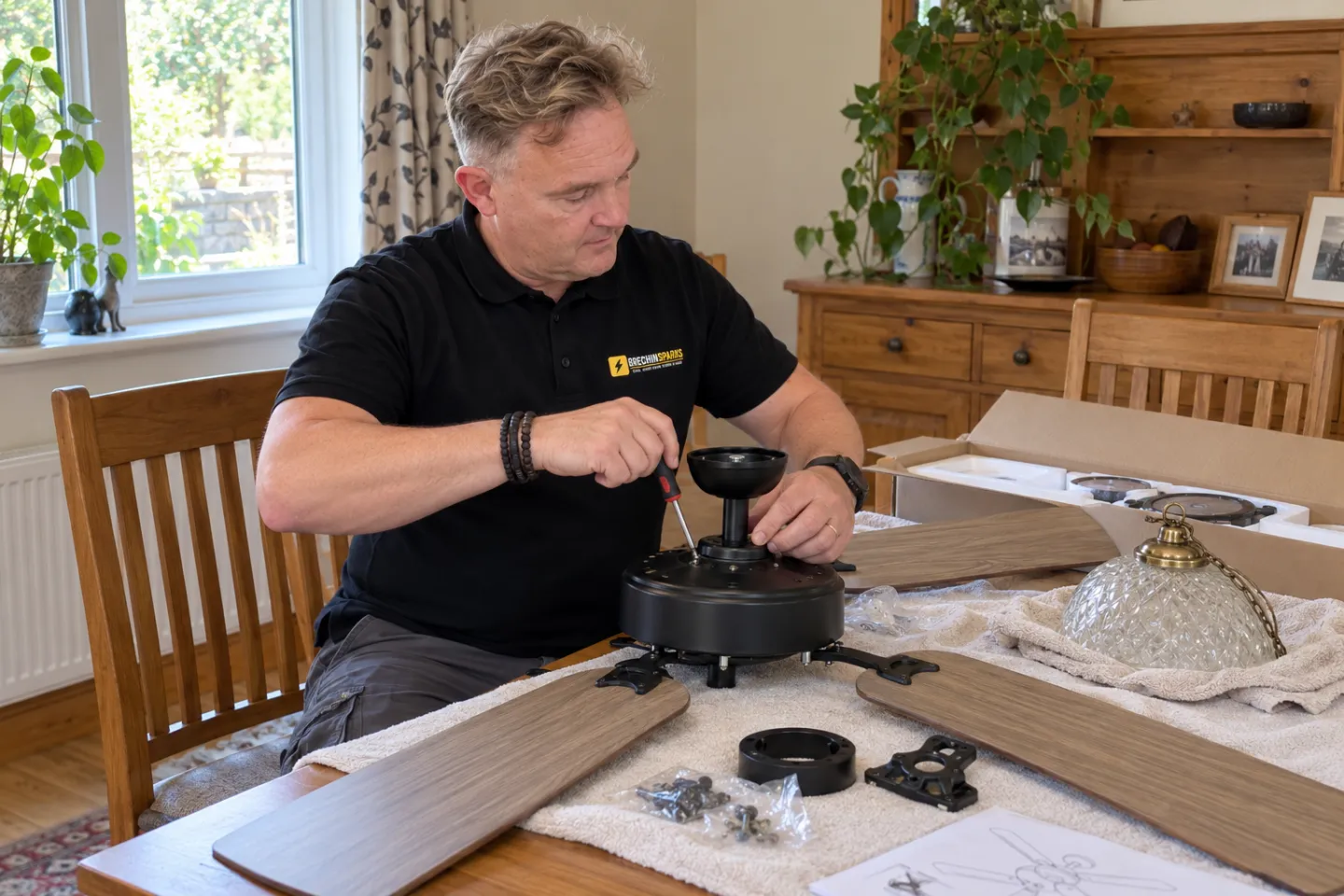
Straightforward like-for-like replacements or installations into existing pre-wired ceiling roses usually take 1 to 2 hours to complete
A like-for-like replacement or a new fan fitted to an existing pre-wired ceiling rose usually takes just one to two hours. Your electrician isolates the circuit, removes the old fitting, and checks the existing wiring is safe and suitable.
They’ll then mount a bracket rated for the fan’s weight, connect the wires, attach the motor housing and blades, and test the fan’s speeds and light.
At £40 to £60 an hour, you’ll typically pay £50 to £120 in labour for this job. Since many electricians charge a minimum call-out fee covering the first hour, a quick swap often costs little more than that fee.
You can keep the job within this timeframe by buying the fan beforehand, clearing the area beneath it, and confirming your ceiling joist can support the weight. If your electrician finds damaged wiring or needs to add a switch, expect extra time and cost.

Installing a ceiling fan in a brand-new spot requiring fresh wiring, conduit, or a new wall switch pushes labour costs to £200 to £350
If you want a ceiling fan where no light fitting currently exists, expect to pay £200 to £350 in labour. Your electrician has to run fresh cable from the nearest circuit, cut into the ceiling, and fit a secure mounting point that can bear the fan’s weight and movement.
If they can’t route cable through the ceiling void, they’ll use surface conduit or trunking, which adds time.
Adding a new wall switch raises costs. Your electrician must chase cable down the wall, fit a back box, and connect the switch or a dedicated fan controller with speed settings. Expect a day’s work rather than an afternoon.
Plastering and redecorating after chasing walls usually aren’t included, so budget separately for making good. Because new circuits and bathroom work must meet BS 7671, your electrician will test the installation and issue an Electrical Installation Certificate.
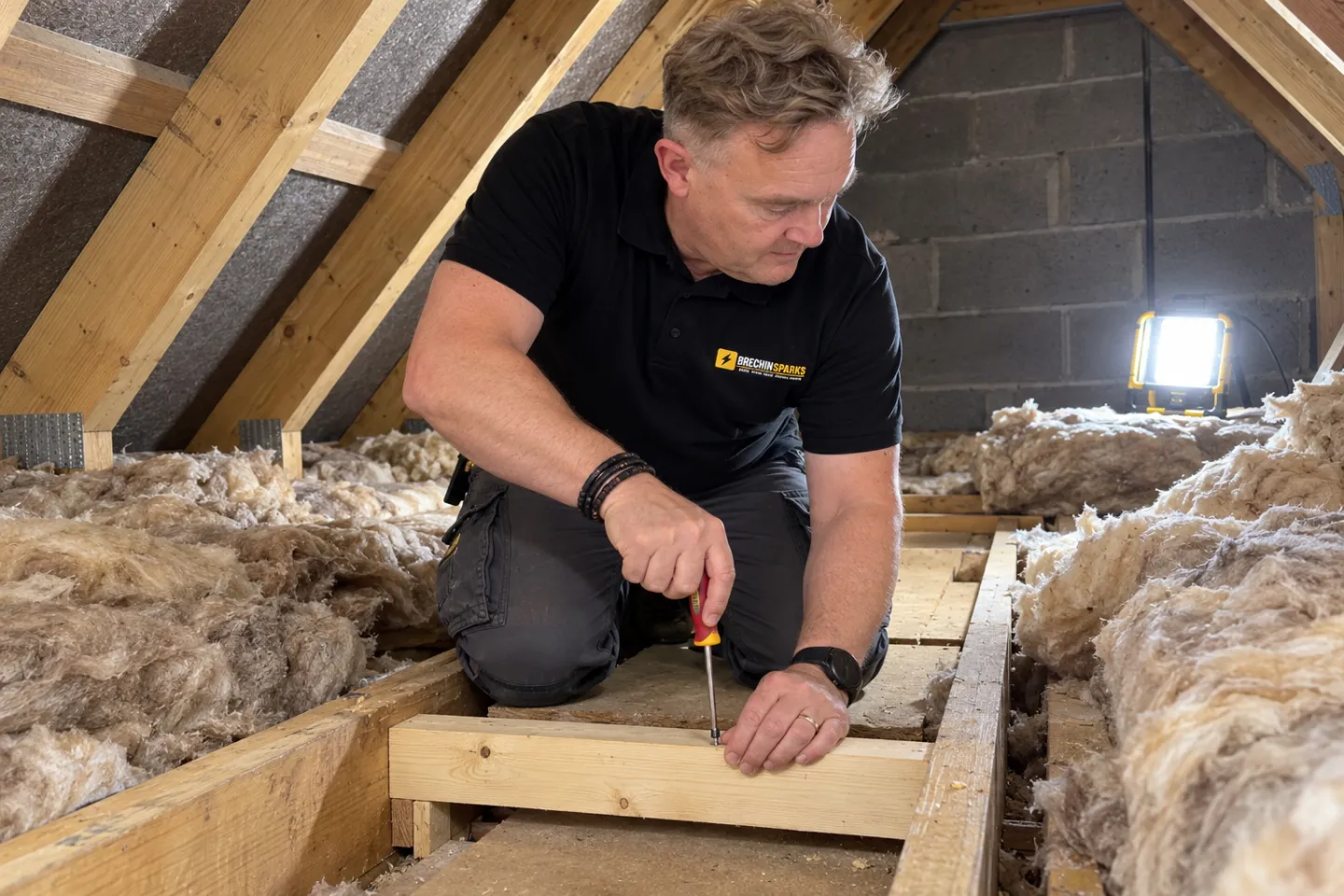
Strengthening ceiling joists with timber noggins or fitting an approved fan-rated mounting box adds an additional £50 to £100 in labour and hardware
Because a ceiling fan wobbles and vibrates as it spins, it puts far more strain on your ceiling than a static light fitting does, so your electrician may need to reinforce the mounting point. A standard plastic ceiling rose or light box isn’t designed to carry a fan’s weight and movement, and it can loosen over time.
Expect this work to add £50 to £100 in labour and hardware to your bill.
If your fan sits between joists, your electrician will fit a timber noggin, a length of wood fixed across two joists, to create a solid anchor. Where loft access is easy, this takes under an hour.
Without access, they may need to cut and patch the ceiling, pushing costs towards the upper end.
Alternatively, they can fit an approved fan-rated mounting box or brace bar, which spreads the load safely. Don’t skip this step.
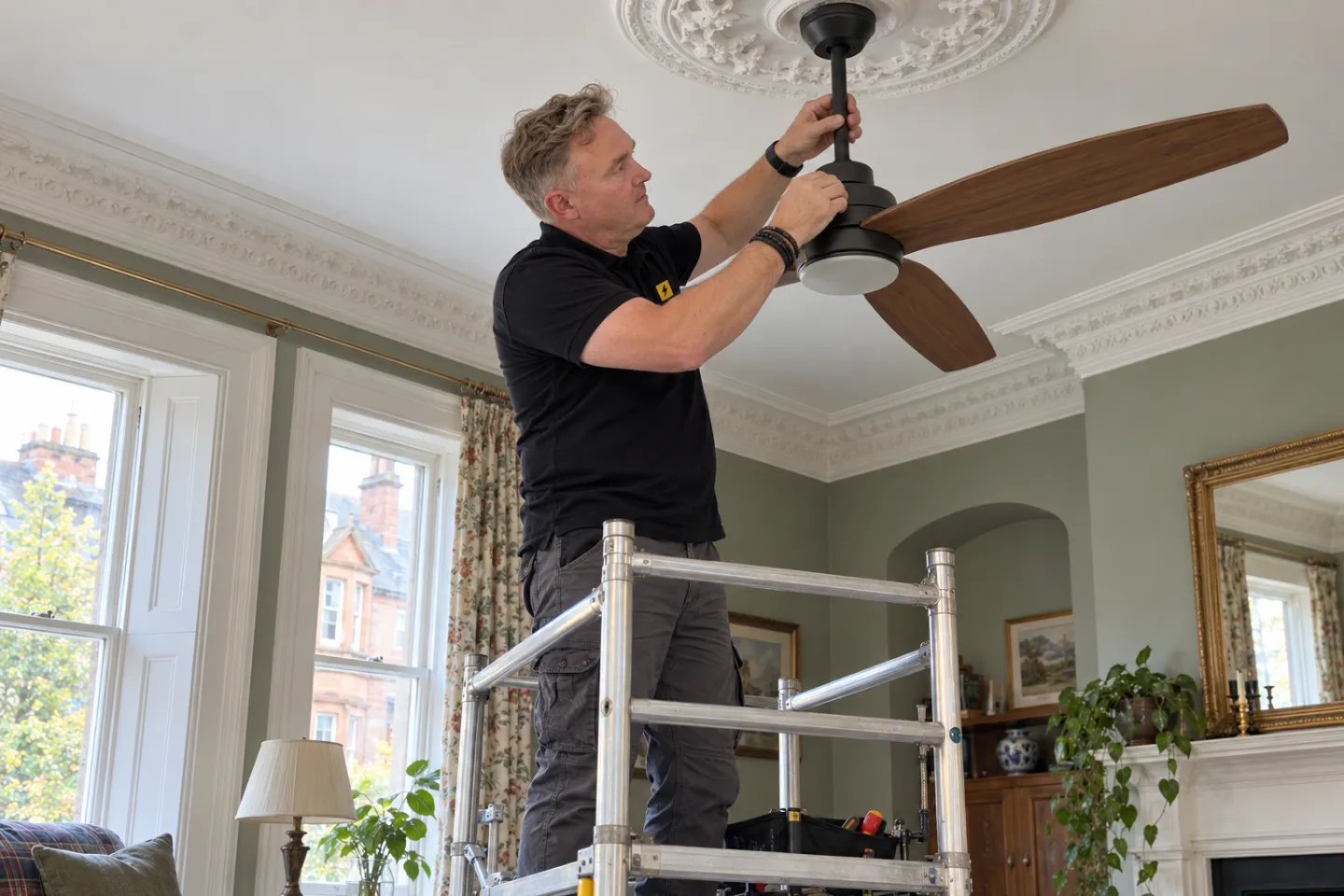
High, vaulted, or sloped ceilings that require extra access equipment or extension downrods increase the installation charge by £100 to £200
When your ceiling rises well above the standard 2.4 metres, or slopes at an angle, expect to pay an extra £100 to £200 for installation. Your electrician can’t safely reach these heights from a stepladder, so they’ll need a platform tower, scaffold, or long extension ladder.
Hiring that equipment typically costs £40 to £80 a day, and setting it up adds labour time.
Sloped and vaulted ceilings bring another challenge. A fan mounted flush to an angled surface won’t hang level, wobbles, and wears out quickly.
You’ll need an angled mounting kit and an extension downrod, which together cost £20 to £60. The downrod also lowers the blades to around 2.1 to 2.4 metres above the floor, where they’ll circulate air effectively.
To keep costs down, check your ceiling height and pitch before requesting quotes, and mention them upfront so electricians can price the job accurately first time.

Conclusion
You’ll typically pay £100–£250 in labour for an electrician to swap an existing light for a ceiling fan, while a simple like-for-like job on existing wiring can cost less. If you want a fan in a new spot, budget £200–£350.
You’ll pay more for joist strengthening, fan-rated boxes, or high and sloped ceilings. Before you book, get written quotes that clearly list travel, VAT, parts, and any extra mounting work, so you won’t face surprises.

Written by James Leslie
40 years of electrical engineering experience. Former RAF electrical engineer and retained firefighter at Brechin Fire Station. Fully insured, based in Brechin. More about James