Your socket fronts look tired, cracked or simply out of date, and you’re wondering what an electrician will charge to swap them.
It’s a quick job, but the price isn’t always as simple as you’d expect. A single socket can cost almost as much as several, and the finish you choose changes the bill too.
Before you book anyone, you’ll want to know where your money actually goes.
General guidance only. Electrical work can be dangerous; if in doubt, use a qualified electrician. Read the disclaimer
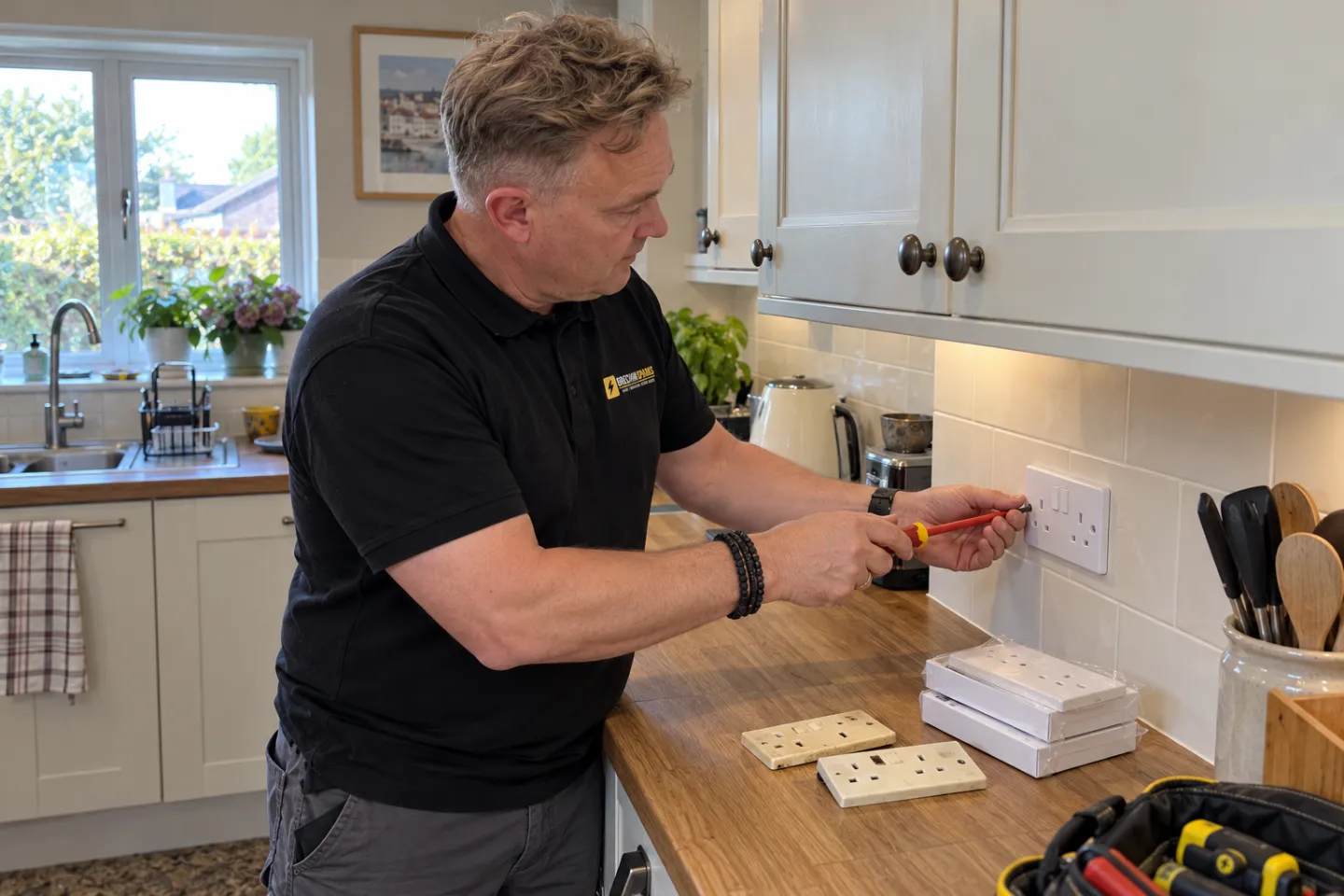
Electricians typically charge £30 to £50 per socket in labour for a like-for-like socket front replacement when multiple sockets are being swapped
Expect to pay £30 to £50 per socket in labour when an electrician swaps several socket fronts like-for-like.
The job’s quick once the electrician’s on site. They isolate the circuit, unscrew the old faceplate, transfer the existing wires to the new front, then test it. Each socket usually takes 15 to 30 minutes, so you’ll see the per-unit price drop as the number of sockets rises.
Here’s how the cost breaks down:
- 4 sockets: £120 to £200
- 8 sockets: £240 to £400
- 12 sockets: £360 to £600
Like-for-like means you’re replacing a single with a single or a double with a double, using the same back box. If you switch to a different size, add USB ports, or need a deeper box, you’ll pay more.
Labour doesn’t include the fronts. Standard white plastic sockets cost £3 to £8 each, while decorative metal finishes can reach £20 or more.
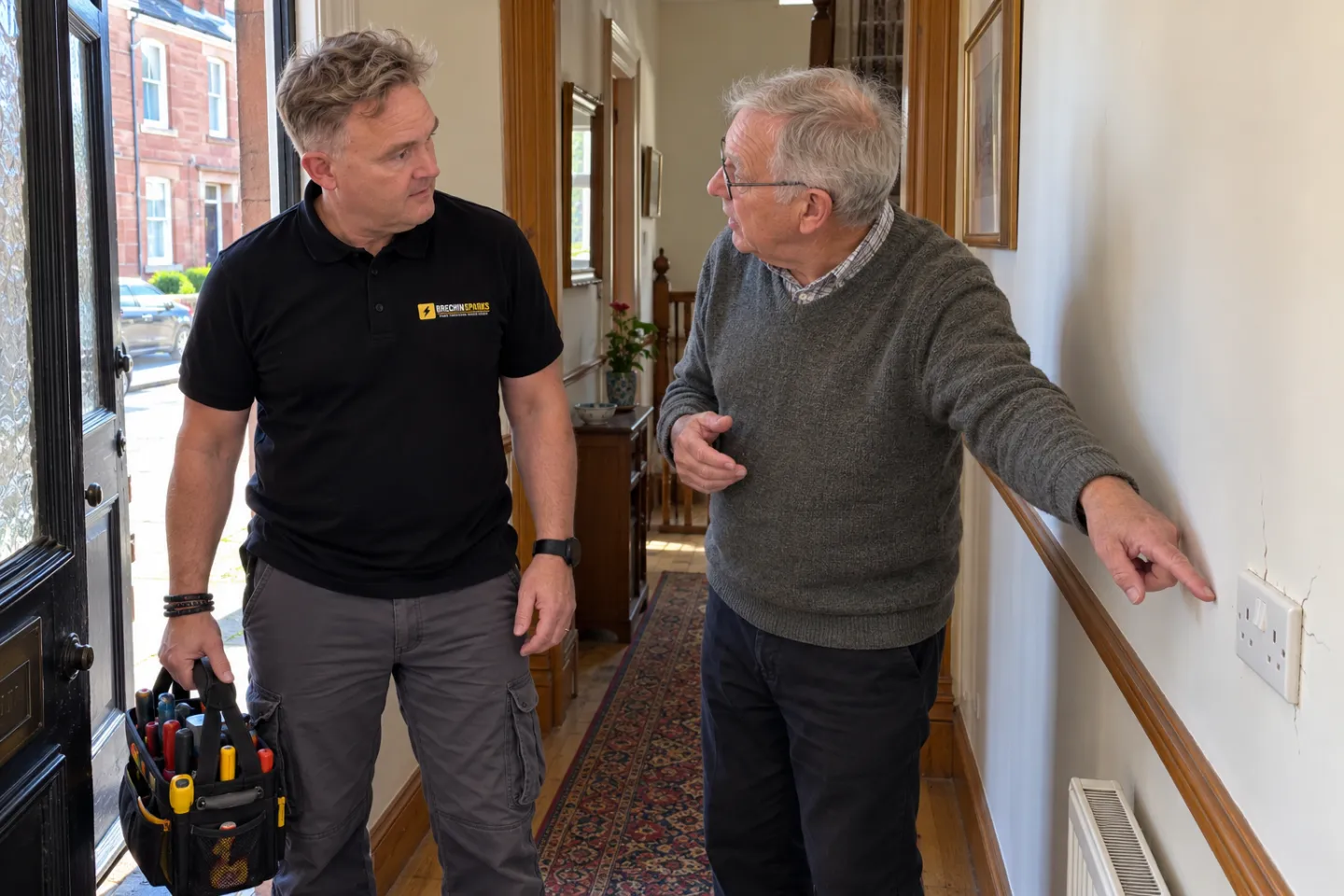
Replacing just a single socket front will usually incur a minimum call-out charge of £50 to £80, which covers the electrician’s travel and first hour on site
A single socket front replacement usually costs £50 to £80, because most electricians charge a minimum call-out fee rather than a per-socket rate. This fee covers their travel to your home and the first hour on site, even though swapping one socket front often takes 15 to 20 minutes.
You’re paying for the electrician’s time and the slot in their schedule, so a quick job still carries the full minimum charge.
To get better value, use the remaining time. If you’ve got other sockets, switches, or light fittings that need attention, ask the electrician to handle them during the same visit. You’ll pay little or nothing extra for work that fits within that first hour.
Rates vary by location. London and the South East sit at the top of the range, while you’ll typically pay less in the North and rural areas. Always confirm the fee before booking.
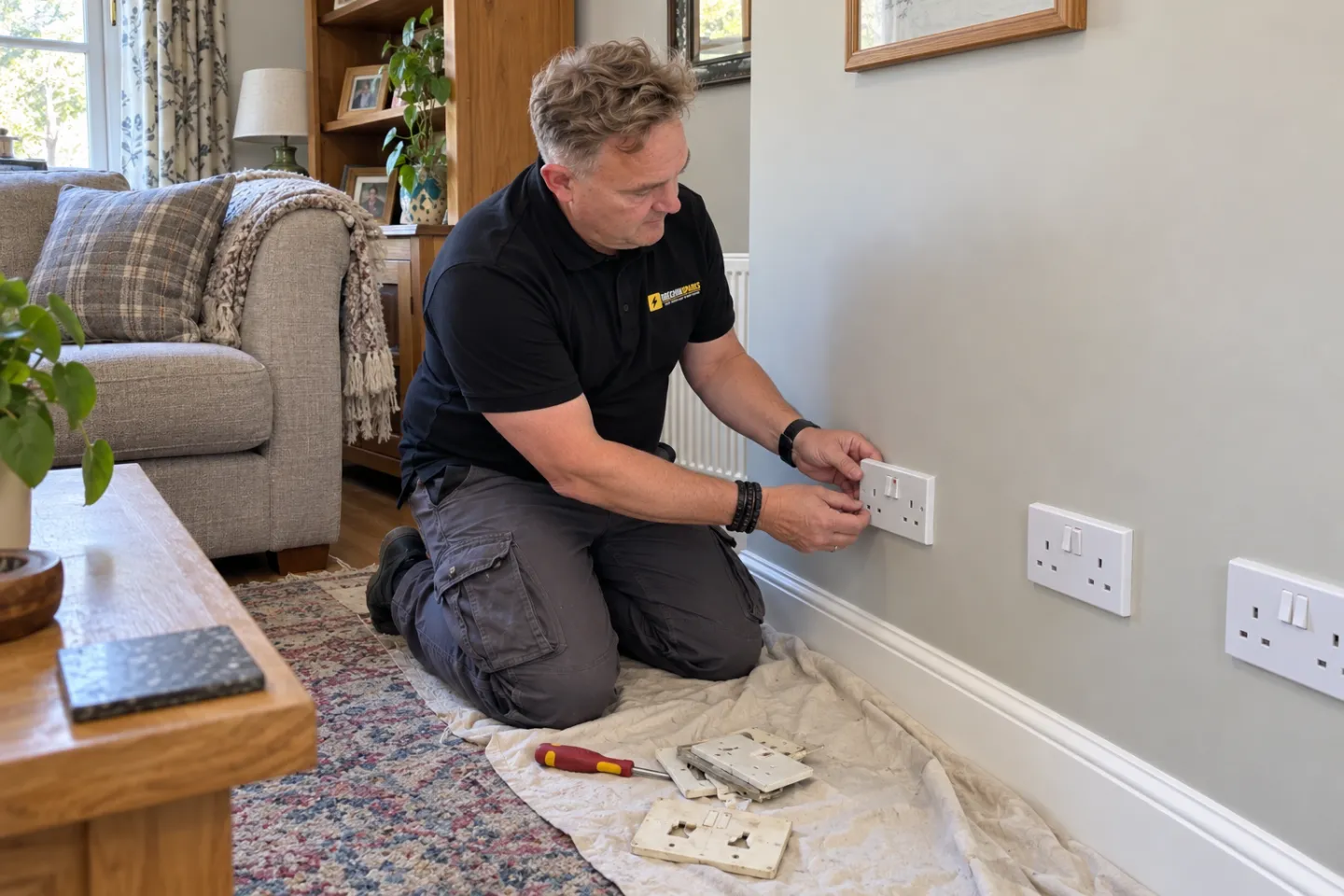
Standard hourly rates for domestic electricians sit between £40 and £60 per hour, with a competent installer able to change 3 to 5 faceplates per hour
Once you’ve got several socket fronts to replace, the hourly rate matters more than the call-out fee. Most domestic electricians charge between £40 and £60 per hour, depending on your region and their experience.
London and the South East sit at the top of that range, while rural areas often fall nearer the bottom.
A competent electrician can change 3 to 5 faceplates per hour. Each swap involves isolating the circuit, removing the old front, checking the wiring and terminals, fitting the new plate and testing it.
Straightforward replacements on modern wiring move quickly, but loose connections, damaged back boxes or old cabling will slow things down.
To estimate your cost, divide the number of sockets by four and multiply by the hourly rate. Replacing 12 socket fronts, for example, takes about three hours, so you’d pay roughly £120 to £180 in labour, plus whatever the faceplates themselves cost.
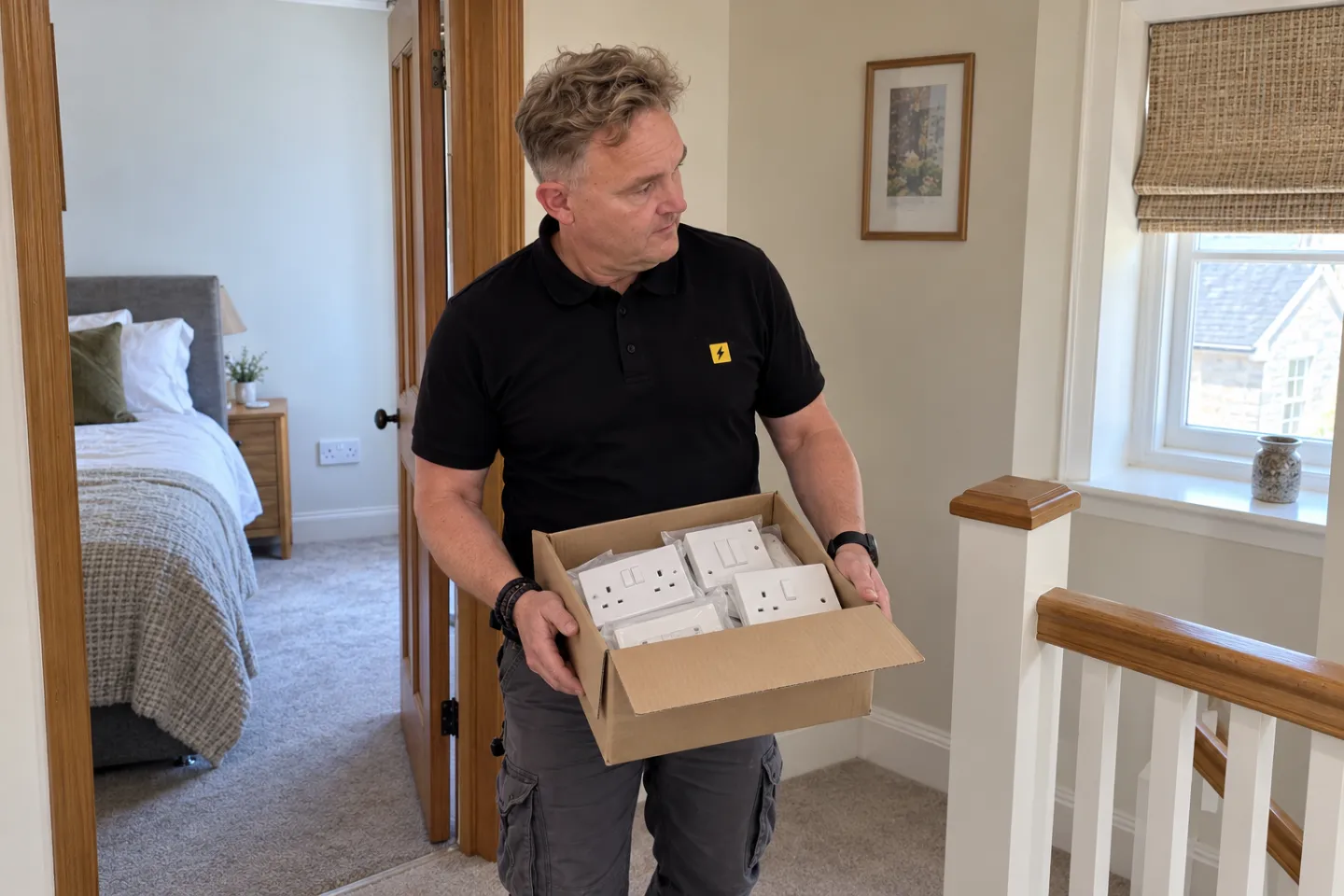
Changing all socket fronts across an entire standard 3-bedroom home (roughly 15 to 25 plates) typically costs £180 to £350 for labour alone
Most standard 3-bedroom homes have between 15 and 25 socket fronts, and changing all of them usually costs £180 to £350 in labour. That range reflects how long the job takes.
At 3 to 5 plates per hour, you’re looking at roughly four to six hours of work, which many electricians price as a half-day or full-day rate rather than billing strictly by the hour.
Several factors push your final quote toward the higher end. Older properties often hide loose connections, undersized back boxes, or damaged cables that need attention before new fronts go on. Upgrading to double sockets with USB ports also adds time, since they’re bulkier and need careful fitting.
To keep costs down, buy your faceplates in bulk beforehand and confirm the electrician’s rate covers testing and certification. Bundling extra small jobs into the same visit, like swapping light switches, gives you far better overall value.
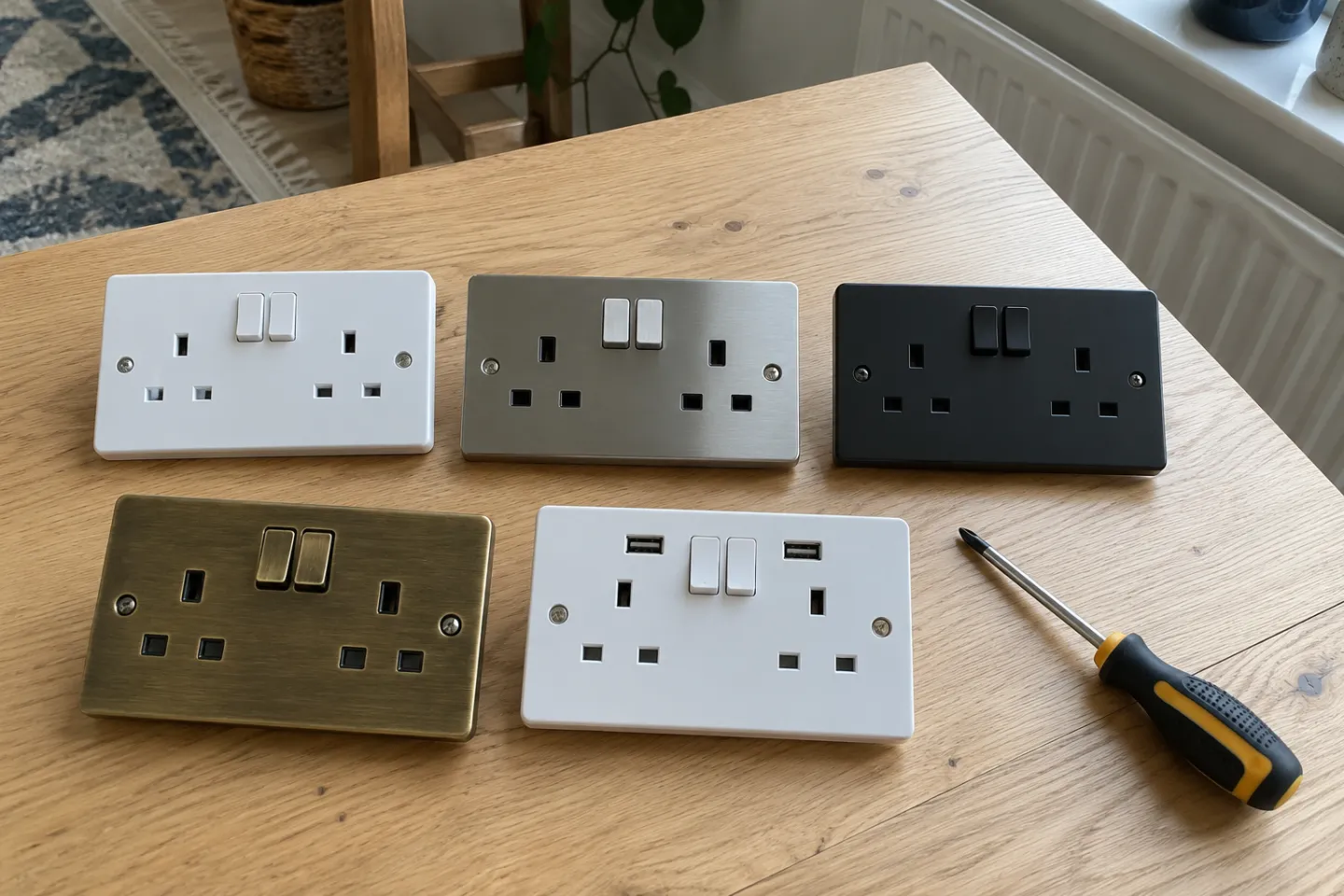
Supply costs vary widely depending on finish, ranging from £2 to £5 for standard white plastic plates to £12 to £30+ for decorative finishes like brushed steel, matt black, or integrated USB models
Labour is only half the bill, and the faceplates themselves can swing your total far more than you’d expect.
Standard white plastic sockets cost £2 to £5 each. They’re durable, easy to clean, and match most homes, so they’re the sensible choice for bedrooms, lofts, and utility rooms.
Decorative finishes push prices sharply. Brushed steel, chrome, matt black, and antique brass plates typically run £12 to £30 each, while screwless designs and premium brands can exceed that. Sockets with integrated USB-A or USB-C ports sit in the same bracket, costing £20 to £35.
Multiply those figures across a whole house and the gap becomes obvious. Twenty white plates might cost £60, but twenty brushed steel versions could top £500.
Ask whether your electrician’s quote includes supplies. Some add a markup, so buying plates yourself can save money, though you’ll need to confirm they’re compatible with your back boxes.
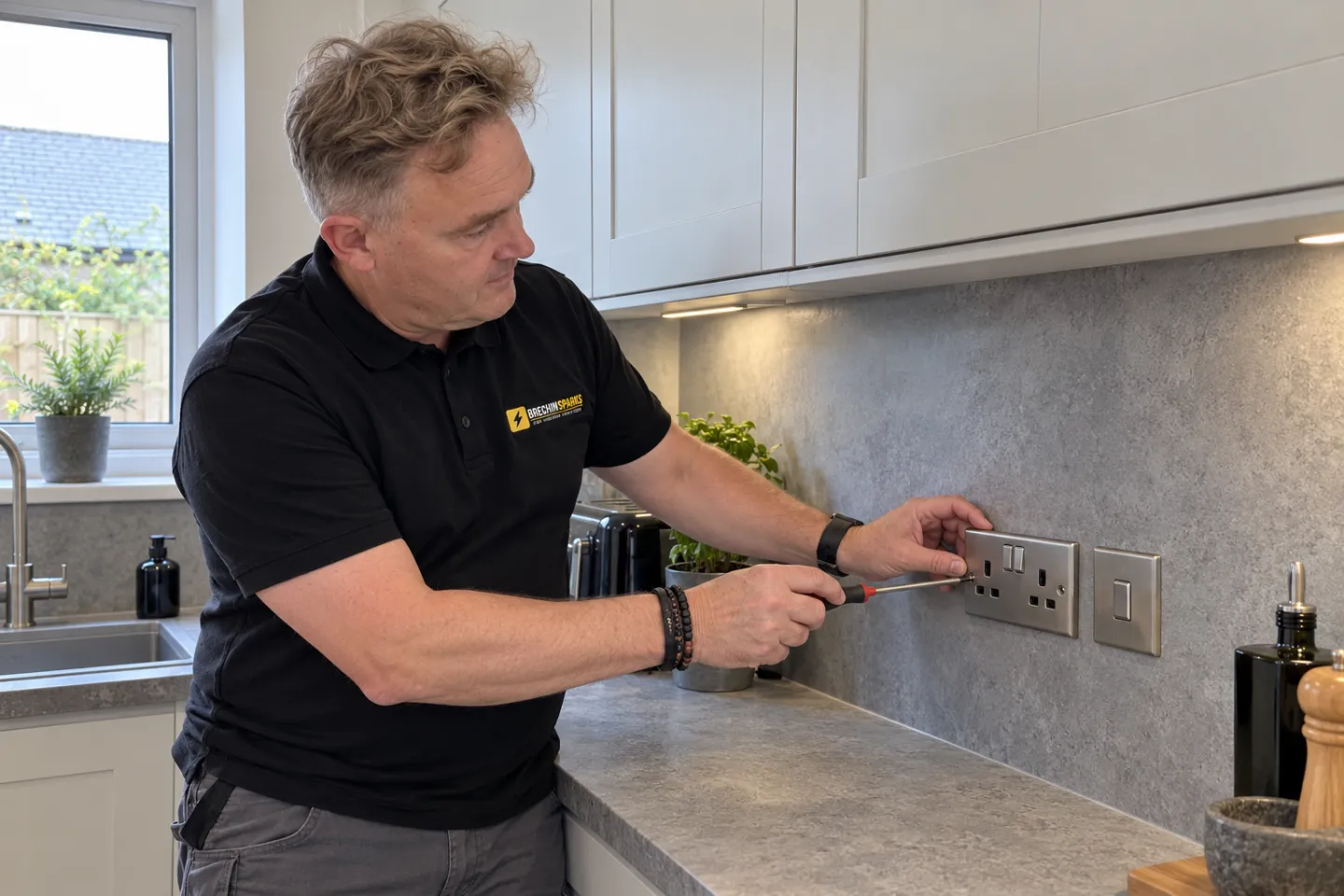
Upgrading to metal faceplates requires the electrician to verify and fit earth fly-leads to the back box, which slightly increases labour time and cost compared to plastic replacements
If you’re swapping plastic sockets for metal ones, your electrician can’t simply unscrew the old plate and fit the new one. Metal faceplates can become live if a fault occurs, so they must be properly earthed to keep you safe.
Your electrician will first check that the circuit has a sound earth connection. Then they’ll fit a short earth fly-lead between the socket’s earth terminal and the back box’s earth terminal, ensuring the plate and box are bonded.
If your property has older wiring, they may find a missing or damaged earth conductor, which needs fixing before any metal plate goes on.
This extra step adds around five to ten minutes per socket. Fly-leads cost pennies, but the added labour may raise your bill slightly, often £5 to £10 per socket. Across a whole house, it adds up, so factor it into your budget when choosing metal finishes.
Conclusion
You’ll usually pay £30–£50 per socket when you’re swapping several fronts, while a single replacement will cost £50–£80 because of the minimum call-out charge. If you’re refitting a whole 3-bedroom home, you can expect £180–£350 in labour.
Your choice of finish affects the bill too: standard white plates cost £2–£5, but decorative or USB models can top £30, and metal fronts need extra earthing work. Check whether your electrician’s quote includes materials before you book.

Written by James Leslie
40 years of electrical engineering experience. Former RAF electrical engineer and retained firefighter at Brechin Fire Station. Fully insured, based in Brechin. More about James