If you’re planning to charge your electric car at home in Scotland, you’ll want to know the cost first.
Labour usually runs between £300 and £500, but that’s rarely the whole story. Your property, cable route and fuse box can all push the final bill higher.
You might also qualify for help that cuts the cost. Here’s what shapes the price you’ll pay.
General guidance only. Electrical work can be dangerous; if in doubt, use a qualified electrician. Read the disclaimer
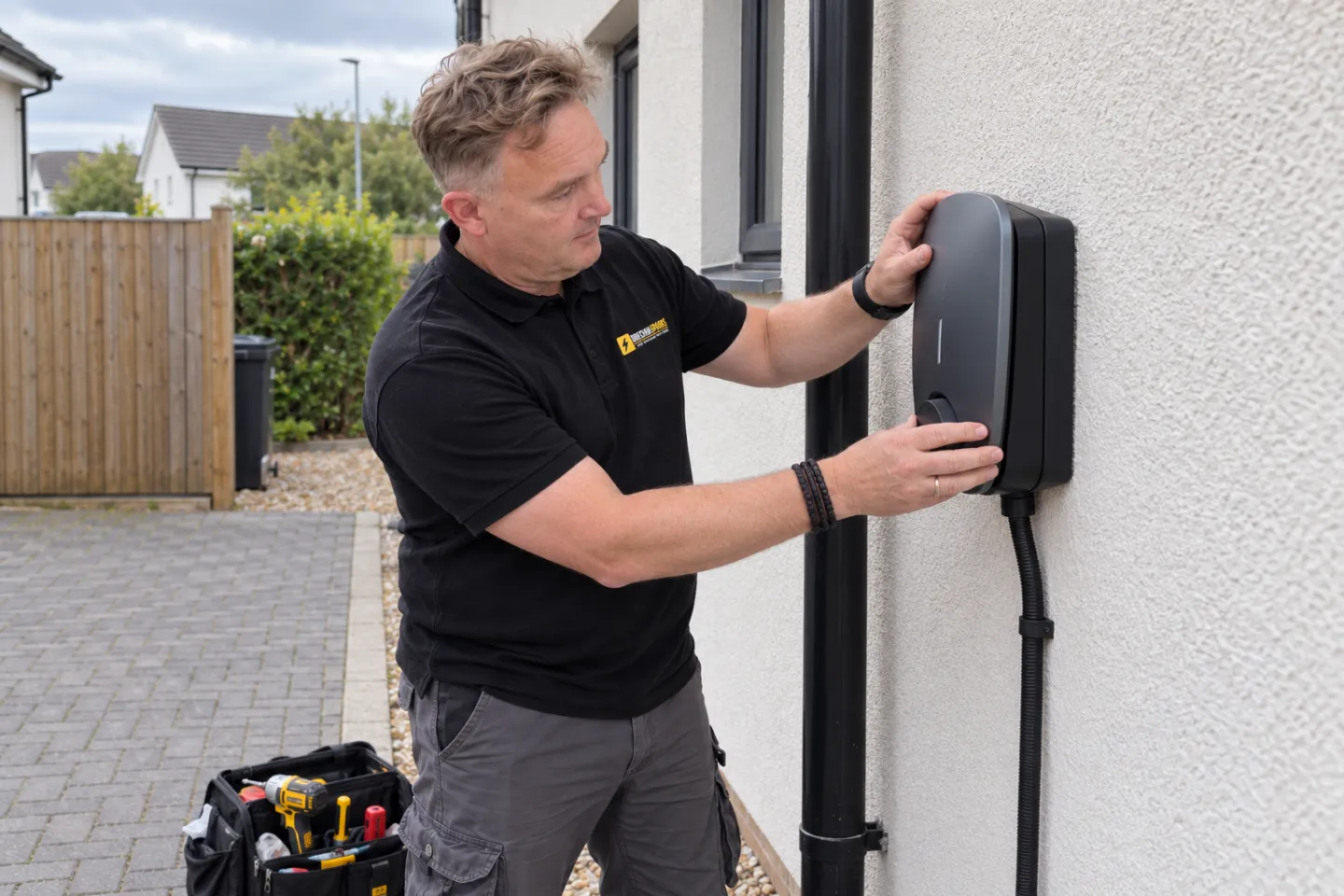
Electricians typically charge £300 to £500 for labour alone on a standard home EV charger installation
When you book a standard home EV charger installation in Scotland, you can expect to pay an electrician between £300 and £500 for labour alone. That figure covers a job taking roughly three to five hours, during which your electrician mounts the charger, runs cabling from your consumer unit, fits a dedicated circuit breaker, and tests the system.
Where you live affects the price: you’ll usually pay more in Edinburgh and Aberdeen than in smaller towns, though remote Highland and island locations often add travel charges.
Labour costs rise if your charger sits far from the fuse board, needs drilling through thick stone walls, or requires a consumer unit upgrade. Always ask whether a quote includes notifying your network operator and issuing electrical certification.
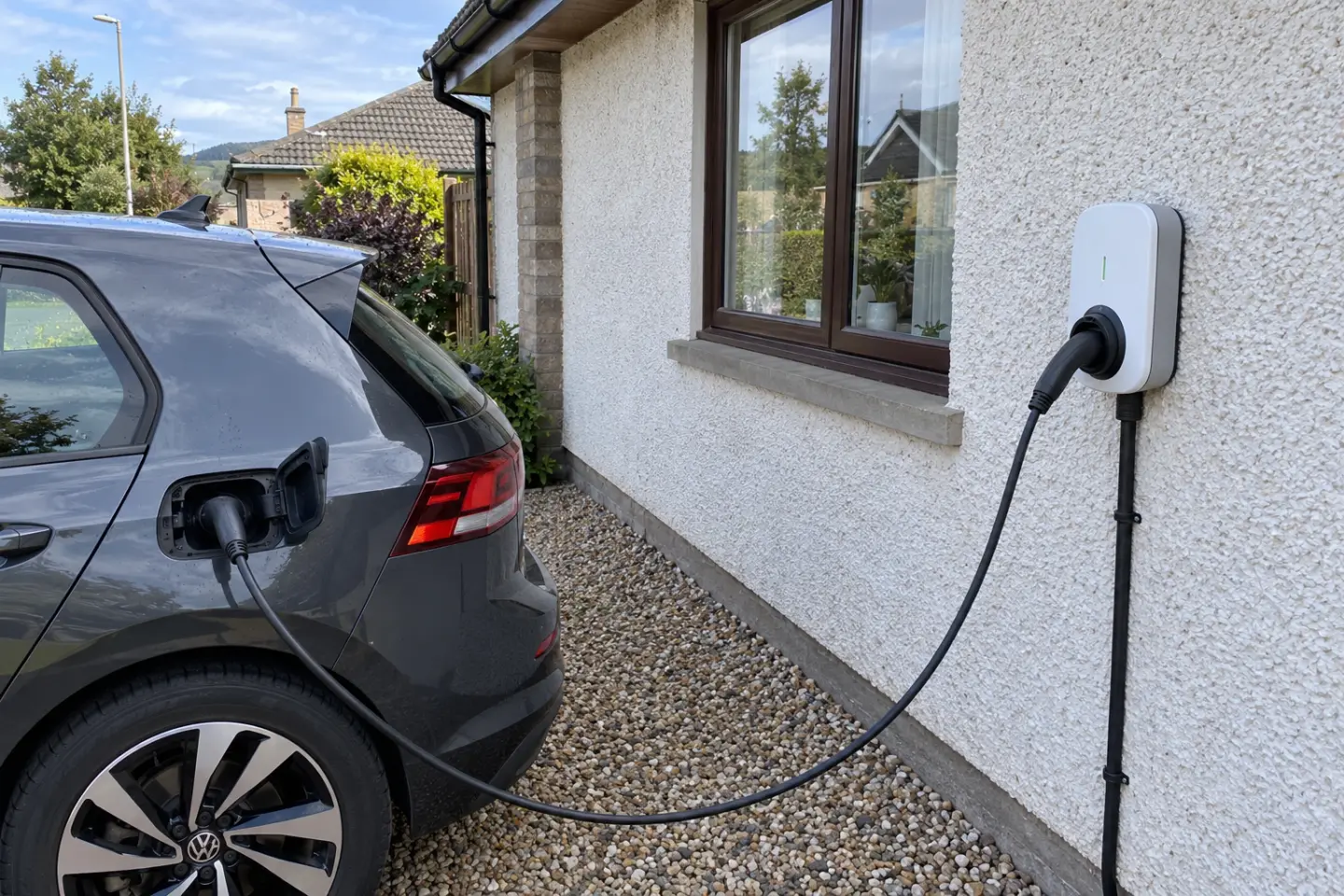
The total price for both supply and installation of a standard 7kW home unit usually ranges between £800 and £1,500
Expect to pay between £800 and £1,500 in total for a standard 7kW home charger supplied and installed in Scotland. The charger itself usually accounts for £500 to £700, depending on the brand and features you choose.
Smart models with app control, scheduling, and solar integration sit at the higher end.
Your final figure also depends on your property. If your fuse box sits close to your driveway, you’ll likely pay near the lower end. Longer cable runs, consumer unit upgrades, or groundworks will push costs up.
Check whether your quote includes the DNO notification, earthing equipment, and post-installation testing. Some installers advertise low prices, then add these extras later. Always ask for an itemised quote so you can compare local installers fairly and accurately.
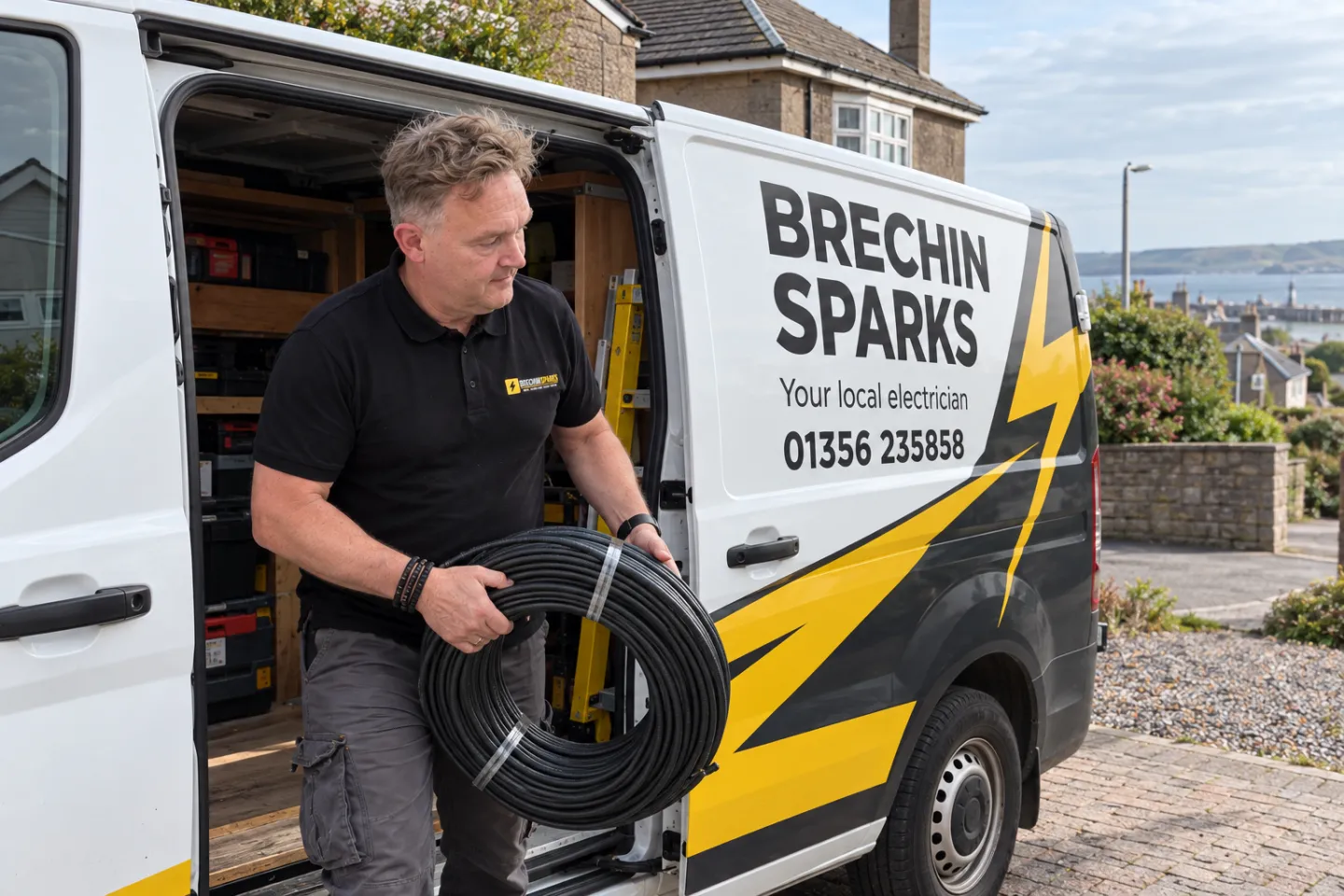
Hourly or day rates for a qualified installer generally sit around £40 to £70 per hour, with a straightforward installation taking between 2 and 4 hours
Although most installers quote a fixed price, many qualified electricians in Scotland charge between £40 and £70 per hour for EV charger work. You’ll usually pay toward the higher end in Edinburgh, Glasgow and Aberdeen, while rural areas may be cheaper but add travel costs.
A straightforward installation takes 2 to 4 hours. That covers mounting the unit, running a short cable from your consumer unit, fitting protective devices and testing the circuit. At these rates, you’d pay roughly £80 to £280 in labour for a simple job.
Some electricians charge a day rate of £250 to £450 instead. You’re more likely to see this when your job needs a consumer unit upgrade, longer cable runs or groundwork. Always confirm whether a quote includes certification and the required DNO notification.
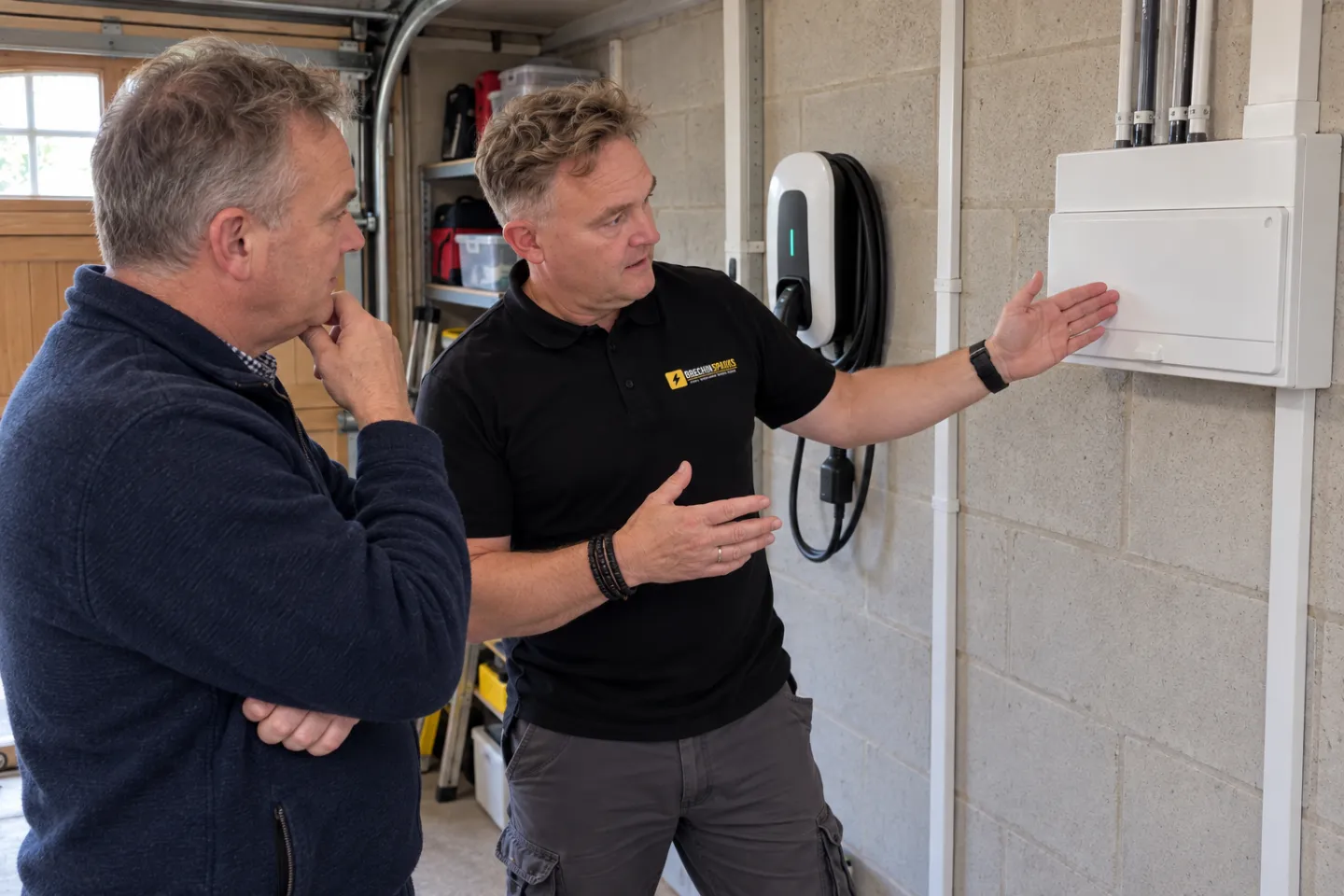
Upgrading an outdated consumer unit (fuse box) to support the dedicated EV circuit will add approximately £550 to £1,000 to the bill
If your home has an older fuse box, you’ll likely need a consumer unit upgrade before an electrician can safely add a dedicated EV circuit, and that typically adds £550 to £1,000 to your bill. Many older units lack spare ways, modern RCD protection, or the capacity to handle a 7kW charger drawing around 32 amps for hours at a time.
Your final price depends on the unit’s size, the brand, and whether your electrician finds wiring faults that need fixing first. Expect the job to take half a day to a full day, during which your power will be off.
Before booking, ask your installer to inspect your board and include any upgrade in a written quote, so you can avoid surprise costs.
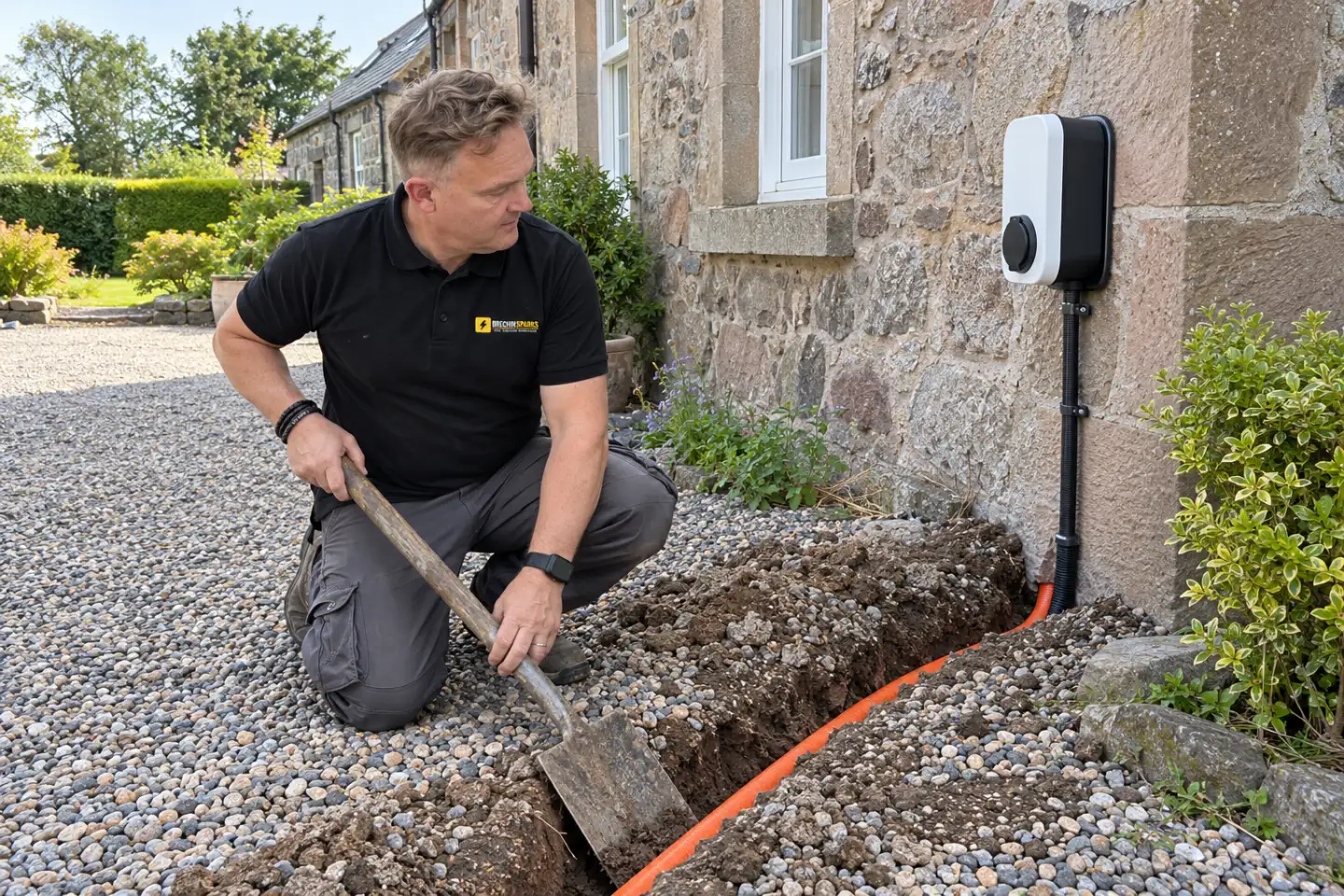
Complex cabling routes, extended distances exceeding 10–15 metres, or underground trenching can increase labour and material costs by an extra £200 to £1,000
Your consumer unit isn’t the only factor that can push up the price. Where you want your charger installed matters just as much.
Most standard quotes assume the cable runs no more than 10–15 metres from your fuse box to the charging point. If your driveway sits further away, you’ll pay for extra armoured cable and the time it takes to fit it.
Complex routes also add cost. Your electrician may need to drill through thick stone walls, which are common in older Scottish homes, or route cabling through lofts, under floors, or around obstacles.
If your charger must sit away from the house, you’ll likely need underground trenching, which involves digging, ducting, and reinstating paving or lawn.
Depending on the complexity, these factors can add £200 to £1,000 to your total bill.
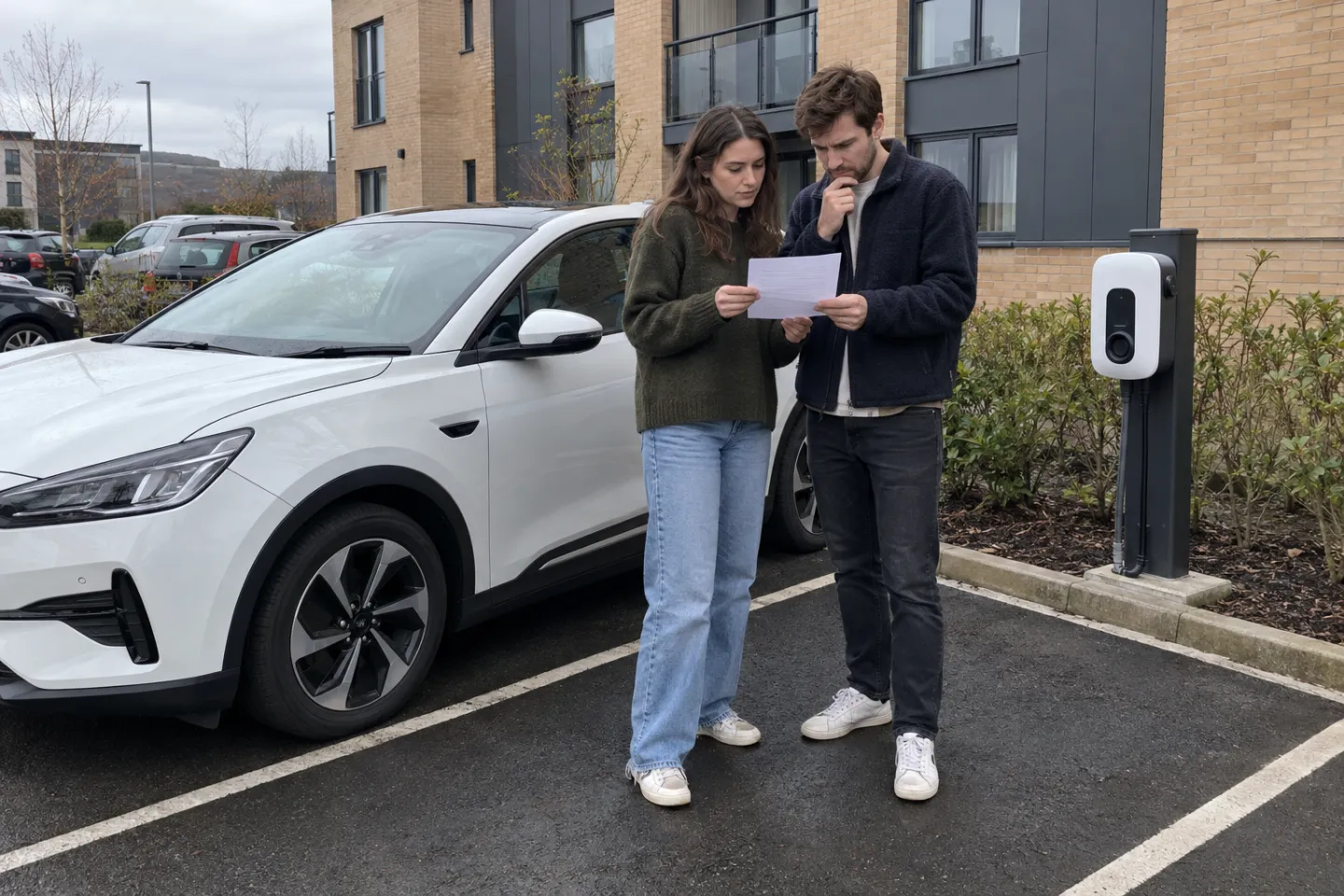
Eligible UK renters and flat owners can reduce these costs using the government EV Chargepoint Grant, which covers 75% of purchase and installation expenses up to £500
While these extra costs can add up, the government’s EV Chargepoint Grant can help you offset them. If you rent your home or own a flat, the scheme covers 75% of your charger’s purchase and installation costs, up to £500.
To qualify, you’ll need off-street parking that’s exclusively yours, and your property must be in the UK, including Scotland. Renters must also get written permission from their landlord before installation begins.
You can’t apply directly. Instead, your OZEV-authorised installer claims the grant on your behalf and deducts it from your final bill, so choose an approved electrician from the outset. For example, if your total quote comes to £1,000, you’ll pay £500 after the grant.
Check GOV.UK for the current limits before you book.
Conclusion
You’ll usually pay £300–£500 in labour to install a home EV charger in Scotland, or £800–£1,500 for a standard 7kW unit supplied and fitted. Expect higher costs if you need a consumer unit upgrade, long cable runs or trenching.
Before you commit, compare several quotes and confirm they include testing, certification and DNO notification. If you rent or own a flat, check GOV.UK to see whether you qualify for the EV chargepoint grant.

Written by James Leslie
40 years of electrical engineering experience. Former RAF electrical engineer and retained firefighter at Brechin Fire Station. Fully insured, based in Brechin. More about James