Discuss electrical faults affecting your grain drying equipment with James. A clear account of the symptoms and the equipment details helps plan an investigation.
Local, Brechin based electricianCovering Angus and surrounding areas within approximately 40 miles
Supply, starters and controls investigatedElectrical supply and relevant controls checked within the agreed scope
Isolated and made safe before any work startsSafe access agreed with the person responsible for the equipment
Costs agreed before work beginsQuote agreed after assessment
Send the dryer make, model, fault indications and any electrical drawings available.
Replies within an hour, 8am–6pm
Local to Brechin, Angus, Scotland
Grain Dryer Electrical Faults in Brechin, Angus
Brechin Sparks is James Leslie, working from a base in Brechin and covering the DD9 postcode area, Montrose, Forfar, Arbroath, Edzell and Dundee within an approximate 40-mile radius.
“James was very polite and sent over the quote immediately after the call and came out the same day in the early evening.”
SamanthaVerified
★★★★★
“He couldn't of been more helpful and still only took what he quoted for, even though it was a bigger job than expected. Definitely recommend.”
Tammy CrockattVerified
★★★★★
“Arrived within an hour of my call, as he said he would. Fixed the problem same afternoon, and rate was extremely reasonable!”
Sarah DundasVerified
★★★★★
“They also give decent price for the job and the work done will be using James again, he is also very polite and very helpful too me.”
katieVerified
★★★★★
“Fast response during a weekend, put in a temporary fix so we got power back. Excellent service.”
Ian MilneVerified
★★★★★
“Very professional and courteous. Highly recommend him.”
BuckyVerified
★★★★★
“James was very polite and sent over the quote immediately after the call and came out the same day in the early evening.”
SamanthaVerified
★★★★★
“He couldn't of been more helpful and still only took what he quoted for, even though it was a bigger job than expected. Definitely recommend.”
Tammy CrockattVerified
★★★★★
“Arrived within an hour of my call, as he said he would. Fixed the problem same afternoon, and rate was extremely reasonable!”
Sarah DundasVerified
★★★★★
“They also give decent price for the job and the work done will be using James again, he is also very polite and very helpful too me.”
katieVerified
★★★★★
“Fast response during a weekend, put in a temporary fix so we got power back. Excellent service.”
Ian MilneVerified
★★★★★
“Very professional and courteous. Highly recommend him.”
BuckyVerified
Why Choose Brechin Sparks for Grain Dryer Electrical Faults?
Brechin Sparks investigates grain dryer electrical faults across Brechin, Angus
James investigates the electrical supply and relevant controls within the agreed scope. Based in Brechin, serving homes, farms and businesses across Angus and surrounding areas within approximately 40 miles.
Work is carried out to BS 7671 by an 18th Edition qualified electrician
Isolation arrangements, moving parts, dust and the operating environment affect how work can be undertaken. Do not bypass protective devices or safety interlocks to keep a dryer running.
You deal directly with James Leslie, not a call centre
Speak directly with James Leslie, based in Brechin, with 40 years of electrical engineering experience, a former RAF electrical engineer and former Angus retained firefighter. Small jobs are welcome, with clear explanations and costs agreed before work begins.
Brechin Sparks is fully insured and locally based
Public liability cover across domestic, commercial and agricultural properties, with costs agreed before any work begins.
Read more about James Leslie and how Brechin Sparks approaches electrical work, from the first enquiry to explaining the completed job.
A fault indication alone does not confirm which component needs replacing.
18th Edition qualified
BS 7671 wiring regulations
City & Guilds 2382-22
Level 3 Award · BS 7671 wiring regulations
Fully insured
Cover for electrical work
Based in Brechin
Local service across a 40-mile radius
RAF electrical engineer
Engineering experience behind the advice
Angus retained firefighter
A background in serving the community
18th Edition qualified
BS 7671 wiring regulations
City & Guilds 2382-22
Level 3 Award · BS 7671 wiring regulations
Fully insured
Cover for electrical work
Based in Brechin
Local service across a 40-mile radius
RAF electrical engineer
Engineering experience behind the advice
Angus retained firefighter
A background in serving the community
Harvest and urgent faults
Can You Guarantee an Immediate Repair During Harvest?
No. Availability, diagnosis and parts affect repair times. Call to discuss the urgency and equipment details so James can explain what assistance is practical.
Fault finding on drying equipment
Loss of power, a motor that will not start or an intermittent control fault can interrupt drying operations. James investigates the electrical supply and relevant controls within the agreed scope.
Motor starters and controls
The condition of connections, protective equipment and control circuits may need checking alongside the incoming supply. A fault indication alone does not confirm which component needs replacing.
Safe access around dust and machinery
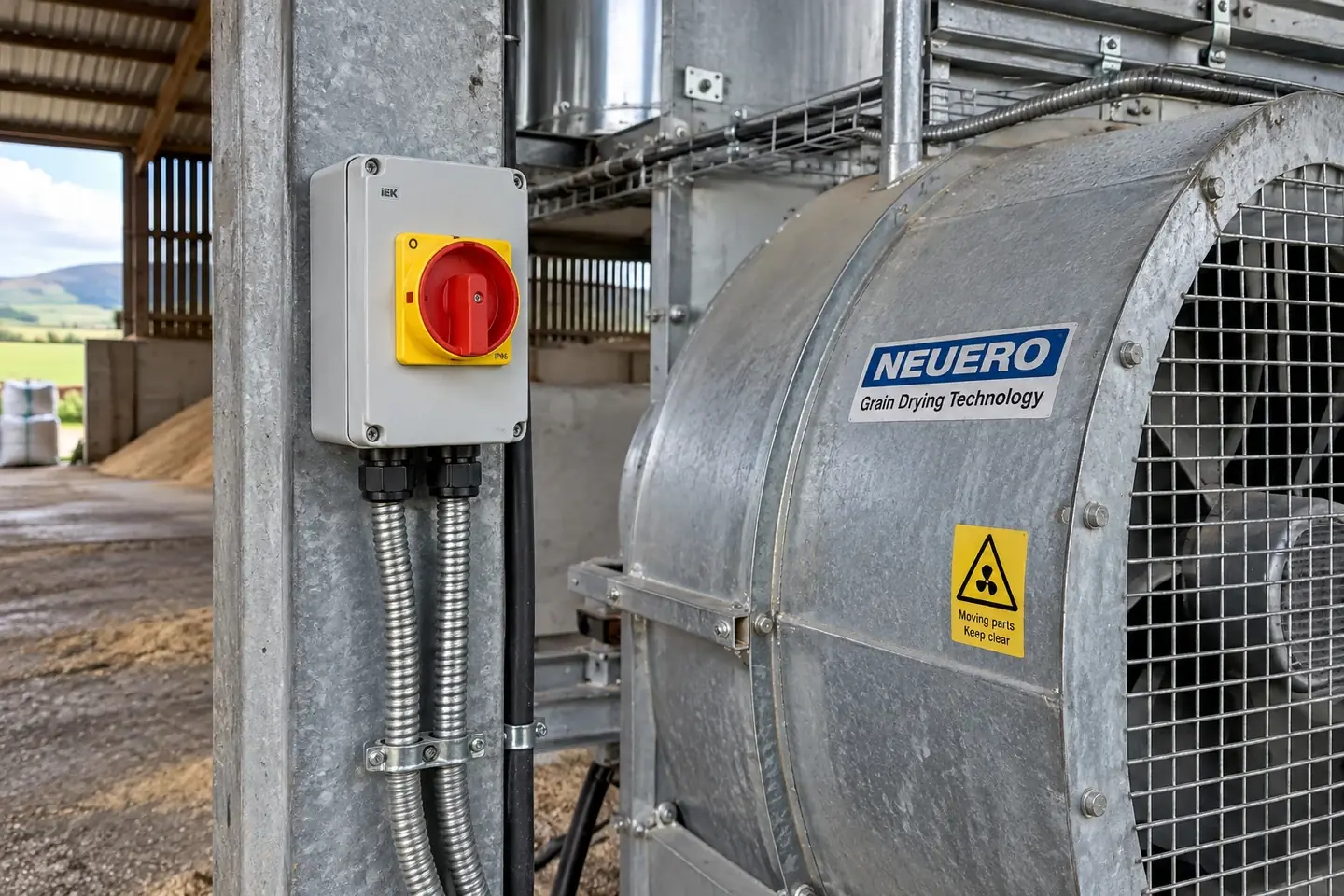
Isolation arrangements, moving parts, dust and the operating environment affect how work can be undertaken. Do not bypass protective devices or safety interlocks to keep a dryer running.
Preparing before harvest
Planned assessment before the busy season can help identify work and parts requirements. For an urgent fault, call with the dryer make, model, symptoms and location.
Have the dryer make, model and symptoms to hand when you call.
Planned assessment before the busy season can help identify work and parts requirements. None of the signs below confirms a particular fault, but each is worth raising with James before the dryer is relied on.
Starters and contactors
A motor that hums, starts intermittently or will not start at all can point to a starter, contactor or overload that needs checking. The condition of connections, protective equipment and control circuits may need checking alongside the incoming supply.
Control panel and sensors
A dryer that stops mid-run, a control fault that comes and goes, or a fault indication that clears on reset can involve the control circuits, sensors or interlocks rather than the motor. A fault indication alone does not confirm which component needs replacing.
Supply and isolators
A supply that trips under load, a lost phase, or an isolator that is stiff, damaged or has been bypassed all warrant a look before the dryer is depended on. James investigates the electrical supply and relevant controls within the agreed scope.
Cable damage and dust build-up
Cables chafed by moving parts or rodents, and dust settling inside panels and around motors, can cause faults that only show once the dryer is running hard. Isolation arrangements, moving parts, dust and the operating environment affect how work can be undertaken.
Describe what the dryer is doing and James explains what can be checked.
What the Electrical Side of a Dryer Fault Covers
The electrical work on a dryer comes down to three things: finding the fault, checking the starters, controls and supply that feed it, and doing both safely around the machinery.
Fault finding for grain drying equipment
Loss of power, a motor that will not start or an intermittent control fault can interrupt drying operations. James investigates the electrical supply and relevant controls within the agreed scope. Equipment documentation and a clear account of the fault help guide the investigation.
Motor starters, controls and supply checks
The condition of connections, protective equipment and control circuits may need checking alongside the incoming supply. Mechanical faults or manufacturer-specific control systems can require specialist support. A fault indication alone does not confirm which component needs replacing.
Safe access around dust and moving machinery
Isolation arrangements, moving parts, dust and the operating environment affect how work can be undertaken. Agree safe access and coordination with the person responsible for the equipment. Do not bypass protective devices or safety interlocks to keep a dryer running.
How Are Grain Dryer Repairs Priced?
No figures are published for grain dryer work, because the price depends on what the investigation finds. What you can expect:
Quote agreed after assessment
The equipment, access, investigation needed and extent of installation or repair affect the price.
Costs agreed before work begins
James explains the proposed work and any additional costs before you agree to proceed.
Specialist support flagged early
Manufacturer-specific controls or mechanical faults may require specialist support alongside the electrical investigation.
Send the dryer make, model, fault indications and any electrical drawings available. The more James knows before the visit, the more of the investigation can be planned.
Preparing for Harvest & Urgent Faults
Planned assessment before the busy season can help identify work and parts requirements. For an urgent fault, call with the dryer make, model, symptoms and location. Attendance and repair times depend on availability, diagnosis, access and suitable parts; an immediate repair cannot be promised.
What James can promise is a straight answer on the phone: whether a visit is practical, what can be checked on site and what is likely to need a part or specialist support.
Idle dryer? A pre-season check is easier to arrange than a harvest call.
The visit follows the same order whatever the dryer. The electrical work stops where a mechanical fault or a manufacturer-specific control system needs specialist support, and James says so rather than guessing.
1
Take the symptoms and dryer details from you
Make, model, what the dryer does and when it does it, and any electrical drawings you have. Equipment documentation and a clear account of the fault help guide the investigation.
2
Isolate and make the machinery safe
Safe access and coordination are agreed with the person responsible for the equipment before anything is opened. Isolation arrangements, moving parts, dust and the operating environment affect how work can be undertaken.
3
Test the supply, starters, controls and sensors
The incoming supply, isolators, motor starters, contactors, overloads, control circuits and sensors are checked in turn. A fault indication alone does not confirm which component needs replacing.
4
Repair or replace the electrical component where agreed
The findings and the cost are agreed with you first. Some parts are manufacturer-specific and may have to be ordered, and mechanical faults or manufacturer-specific control systems can require specialist support.
5
Run up with you and record the work
The dryer is run up under normal control with you present, the protective devices and interlocks are confirmed to be in service, and the findings and work done are recorded.
On completion
What you are left with
What is handed over depends on whether the work was a repair inside the dryer’s own panel or an alteration to the farm’s fixed wiring.
Written note of findings and the work done
What was found, what was tested, what was replaced and anything left for you to decide on, so the next person to open the panel knows what has been done.
Certificate where circuits are altered
An alteration to an existing circuit, such as a replaced isolator or a repaired supply cable, is recorded on a Minor Electrical Installation Works Certificate with its test results. A new circuit or supply to the dryer is recorded on an Electrical Installation Certificate. A like-for-like component replacement inside the dryer’s panel does not always need a certificate; James says which applies before the work starts.
Recommendations for pre-season checks
Where the investigation shows wear, dust build-up or a part likely to give trouble under load, James notes it so it can be planned for rather than found mid-harvest. These are recommendations, not a guarantee against future faults.
Grain Dryer Electrical Faults Across Angus and the Mearns
Based in Brechin, Angus, Scotland, covering arable farms across Angus and the Mearns within an approximate 40-mile radius. Harvest tends to bring several dryer calls at once, so attendance depends on availability and current work. Give James your location and the symptoms to check what is practical.
Brechin and DD9
From the town centre to Trinity and Cookston. Our base, so usually the quickest to arrange.
Montrose and Forfar
Farms, grain stores and agricultural businesses across the Angus towns and the countryside between them.
Arbroath and Edzell
Dryer fault investigations on farms and rural premises, including surrounding steadings and the Mearns side of Edzell.
Dundee
Enquiries welcome from farms and agricultural businesses around the city.
Elsewhere in Angus
Call with your postcode to check coverage within the approximate 40-mile service area.
Frequently Asked Questions About Grain Dryer Electrical Faults
Can you guarantee an immediate repair during harvest?+
No. Availability, diagnosis and parts affect repair times. Call to discuss the urgency and equipment details so James can explain what assistance is practical.
Why does my grain dryer keep tripping?+
There is rarely one answer. A motor overload, a contactor or starter with worn contacts, an earth fault on a cable damaged by moving parts or rodents, a control or sensor fault, or a supply problem such as a lost phase can all trip a dryer, and dust and damp make each of them more likely. Do not keep resetting it to get through the day; repeated tripping is the dryer telling you something is wrong. James tests the supply, starters and controls to find where the trip is coming from.
Can you repair the dryer’s control panel?+
The electrical side, yes: contactors, overloads, relays, isolators, wiring and control circuits within the panel. Manufacturer-specific controls or mechanical faults may require specialist support alongside the electrical investigation, and some replacement parts may only be available from the manufacturer. James tells you which it is once the fault has been found.
Should I have the dryer checked before harvest?+
It is worth doing. Planned assessment before the busy season can help identify work and parts requirements. A check while the dryer is idle lets the connections, starters, controls and cabling be looked at without pressure, and anything found can be planned for rather than dealt with mid-run. It does not guarantee a fault-free season.
Can you work on a three-phase dryer?+
Yes. Most grain dryers run on a three-phase supply, and three-phase motors, starters and distribution are part of the farm electrical work James covers. Where the fault turns out to be in the dryer’s supply, isolator or distribution board rather than the dryer itself, that is handled as three-phase electrical work and quoted in the same way.
What should I do while I wait for an electrician?+
Switch the dryer off at its isolator if it is safe to do so, and leave it off. Do not keep restarting it or resetting a breaker that trips straight back, and do not bypass protective devices or safety interlocks to keep a dryer running. Keep people clear of the panel, the fan and the burner. If there is smoke or a smell of burning, keep everyone away and call 999. Have the make, model and symptoms ready for when you speak to James.
Send the dryer make, model, fault indications and any electrical drawings available. James explains the proposed work and any additional costs before you agree to proceed.