Mains-Powered or Sealed Battery Alarms: Which Suits Your Home?
We supply and install both compliant options depending on your property layout, budget, and wiring infrastructure:
Option one
Mains-powered systems
Supplied from the electrical installation with battery backup appropriate to the chosen model. Existing wiring may be reusable after assessment. Ideal during rewires, extensions, or consumer unit upgrades.
If you are planning full or partial house rewiring, alarm positions and cable routes can be considered alongside the rest of the work.
Best when: there is existing wiring to reuse, or other electrical work is already planned.
Option two
Sealed long-life battery systems
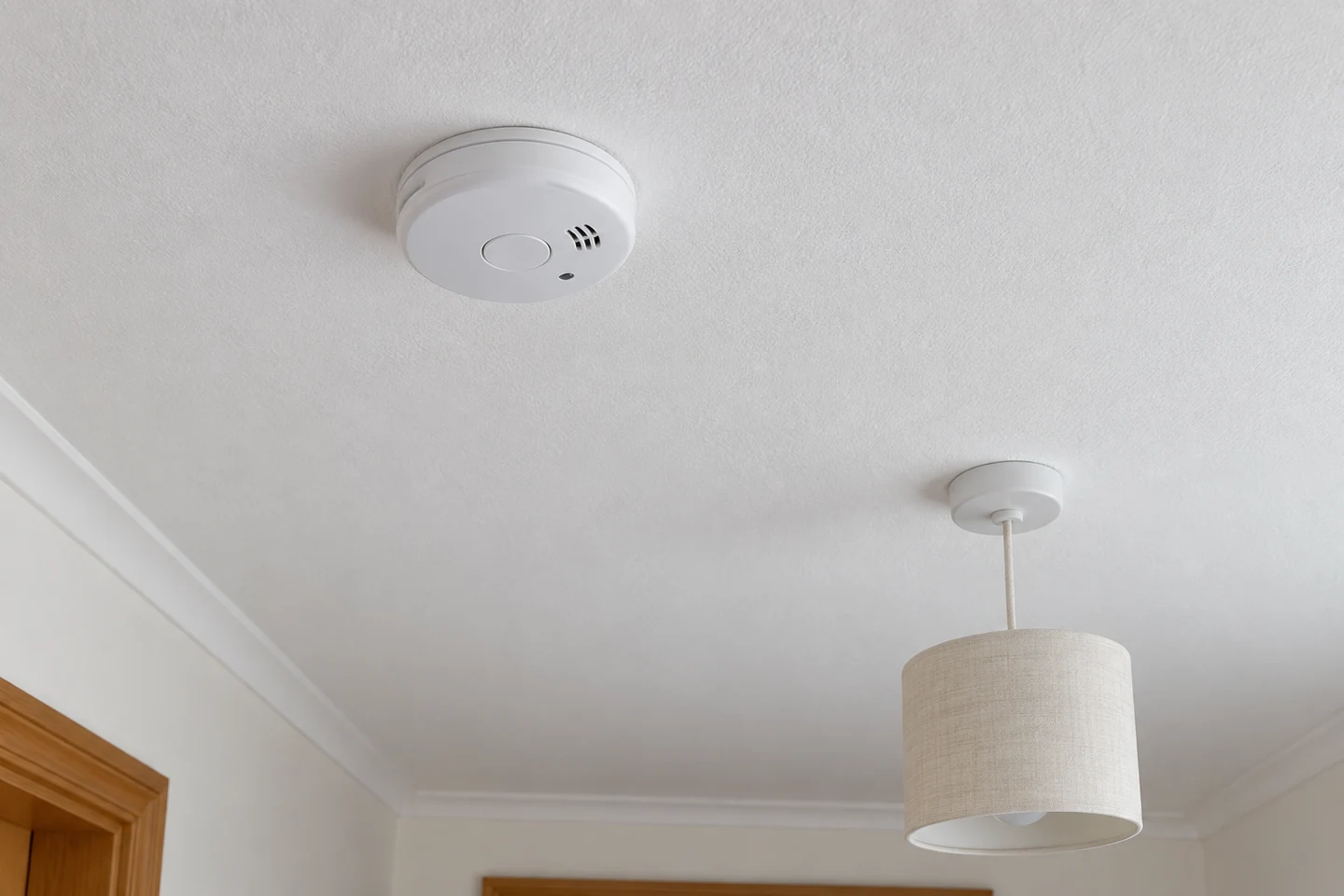
Compatible alarms communicate by radio frequency without needing cables between them. They can be a practical option in an occupied home where disruption to ceilings and decoration matters. The units still need secure mounting and a suitable position; battery life and replacement dates depend on the product.
Best when: the home is occupied and disruption to ceilings and decoration matters.
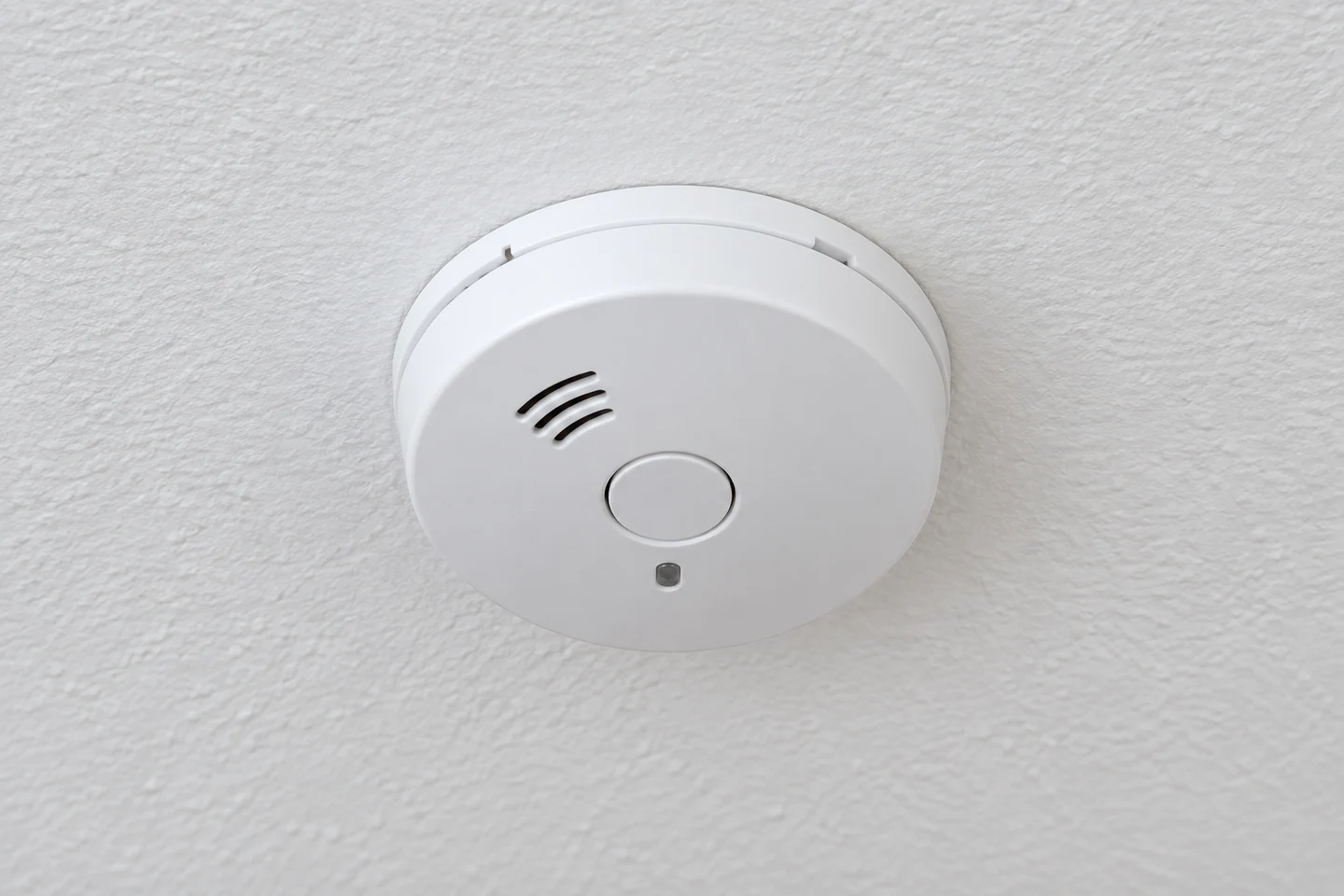
Radio interlinking does not rely on your Wi-Fi or broadband connection. Mains power and interlinking are separate features: a mains-powered alarm can use a compatible radio link. The important check is that the selected units can communicate as one system. See the Scottish Government’s guidance on alarm types.
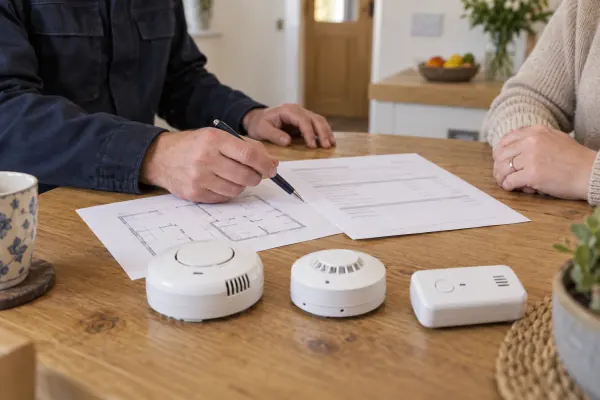
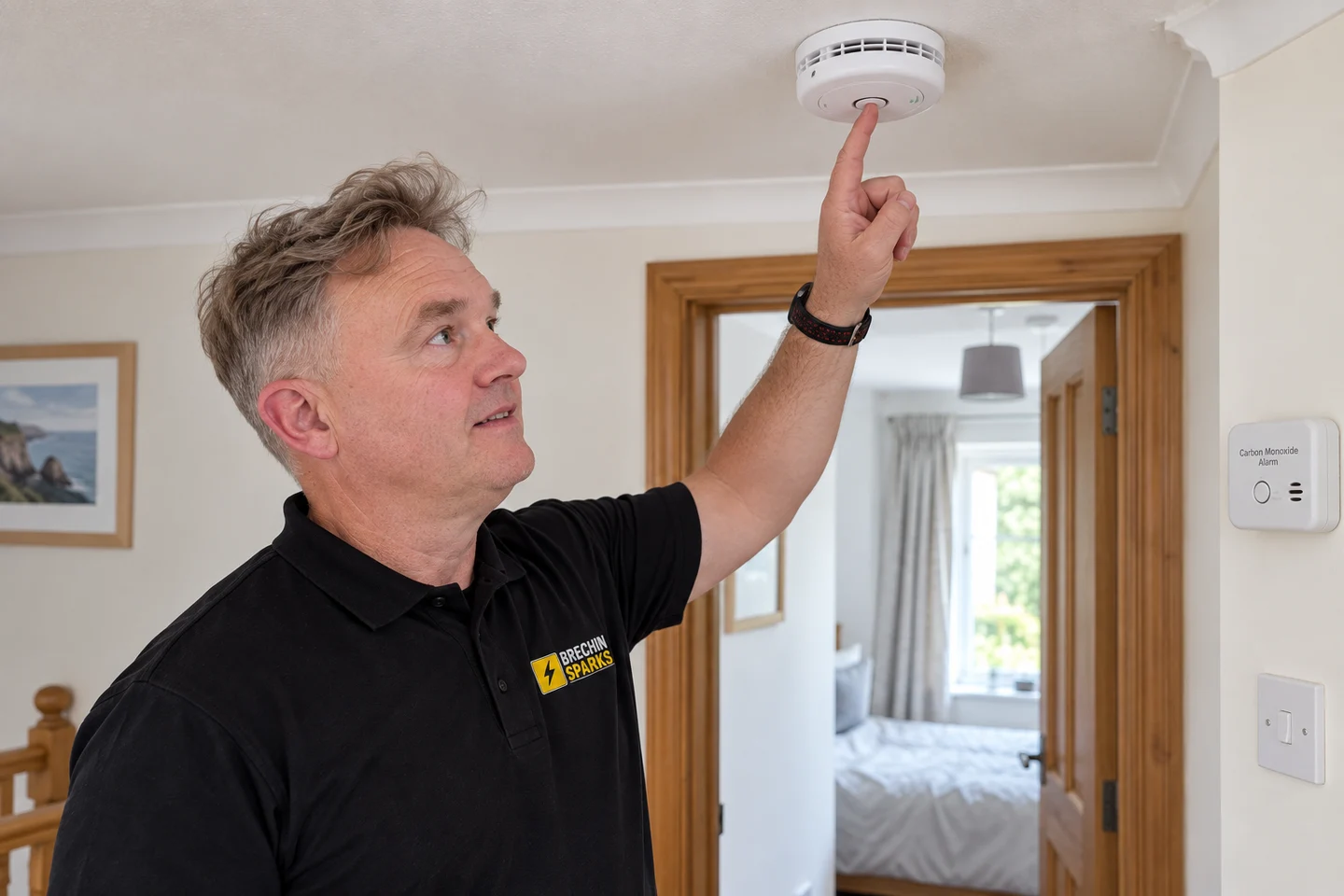
Smoke, heat and carbon monoxide alarms do different jobs. A kitchen heat alarm responds to heat rather than ordinary cooking fumes. Carbon monoxide detection provides a separate warning; a smoke alarm is not a substitute for a CO detector. The location and type of each unit need to suit the room and the manufacturer’s instructions.
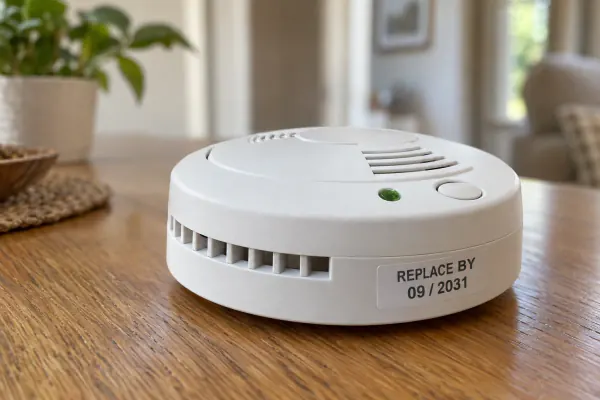
Matching the brand name or appearance is not enough when adding to an existing system. The model, age, power supply and interlinking method all need checking. Send the make, model and visible replace-by date if you can read them safely.
Smoke alarm
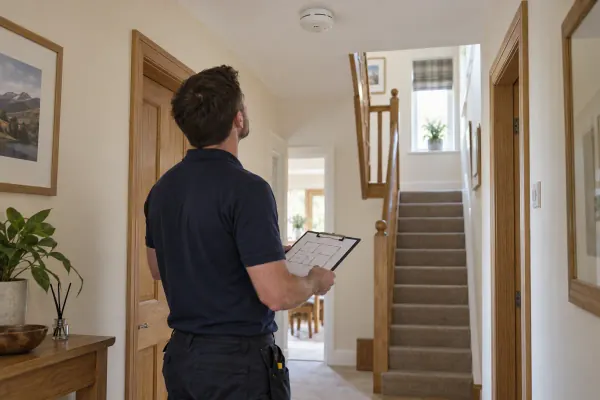
Living room and every circulation space on each storey — hallways and landings.
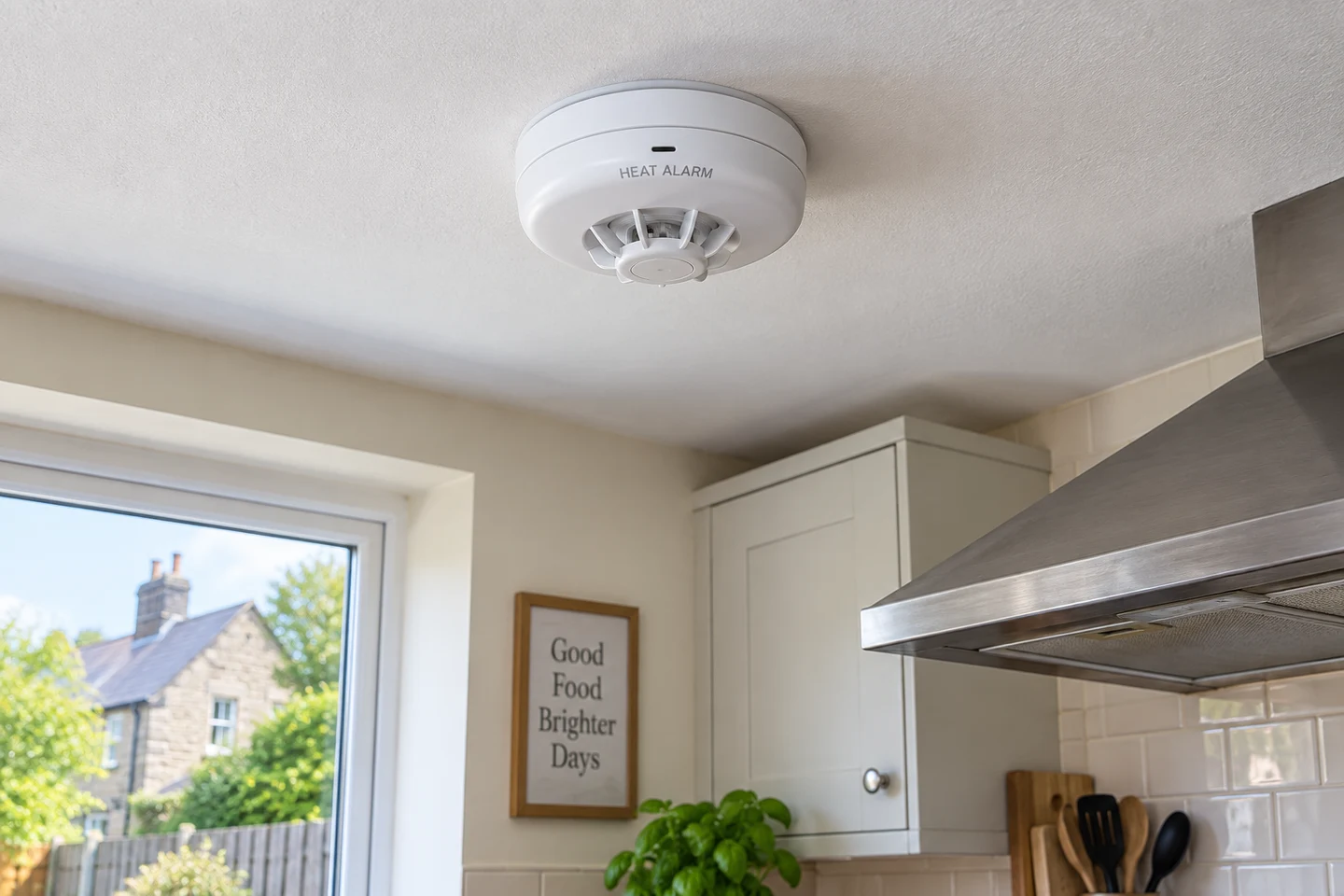
Heat alarm
The kitchen. Responds to heat rather than cooking fumes, so it avoids false alarms.
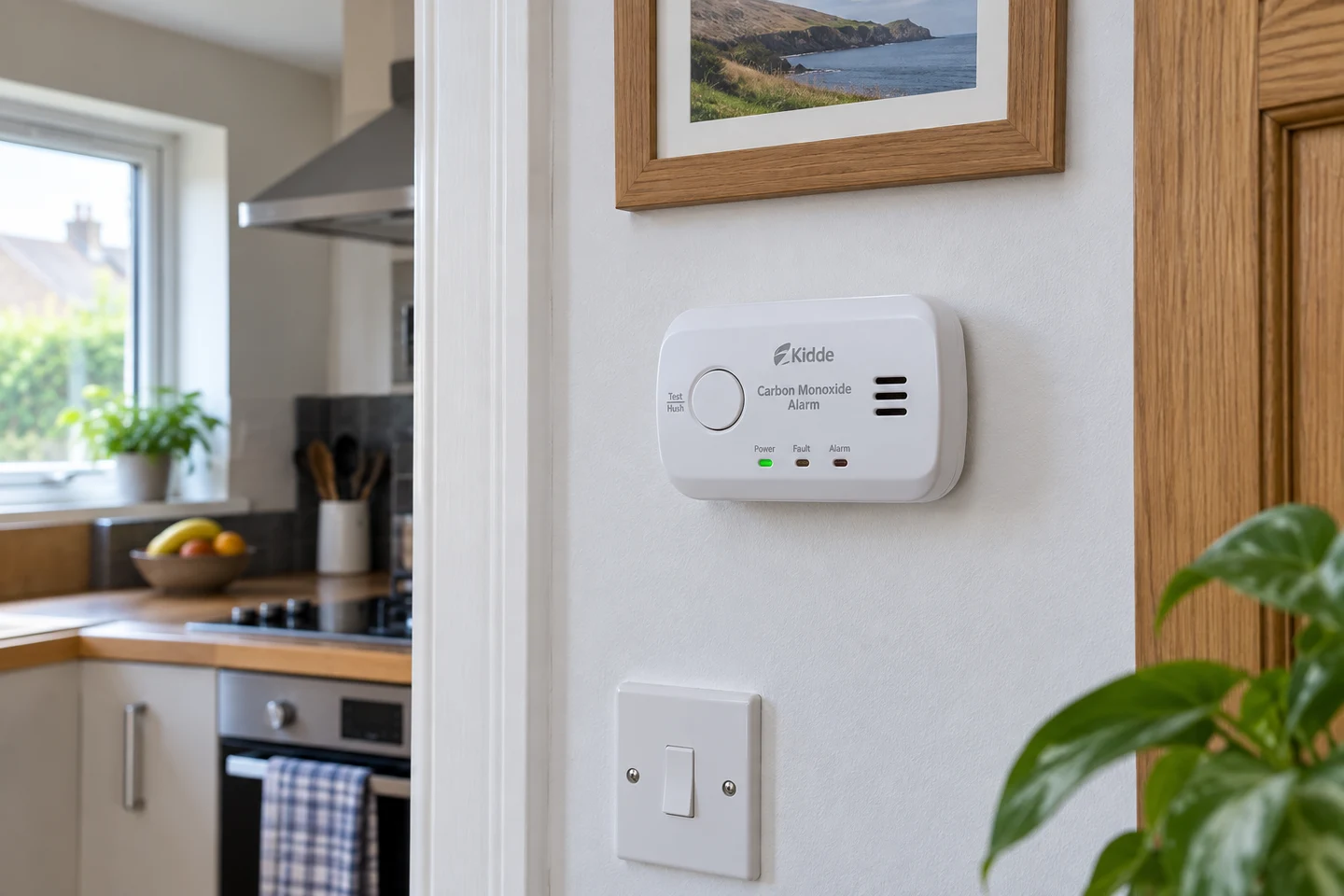
Carbon monoxide alarm
Where there is a carbon-fuelled appliance or flue. Does not need to be interlinked.