Livestock Shed & Barn Electrical Wiring
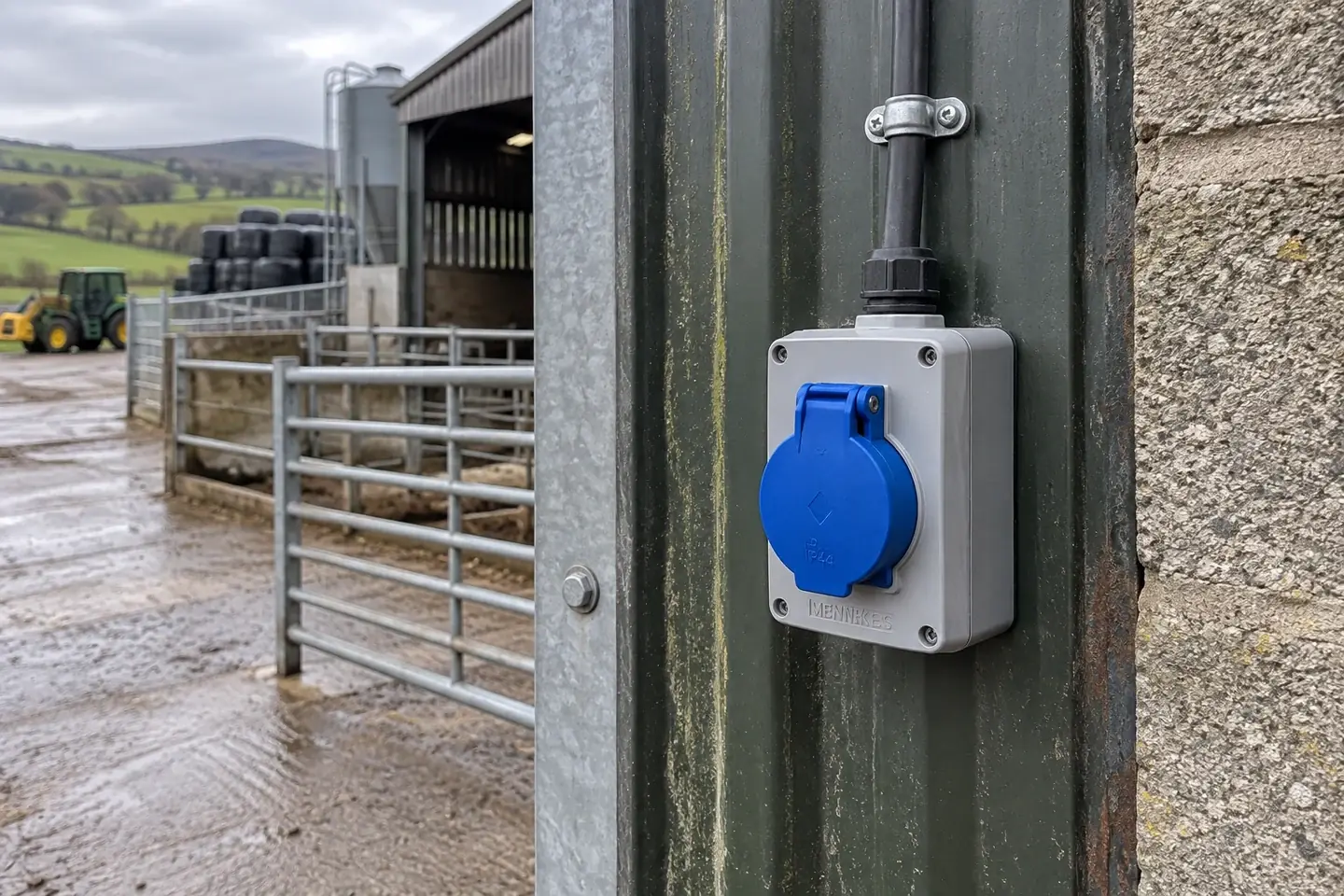
Weatherproof IP-rated LED lighting, high-bay shed illumination, outdoor floodlighting, and IP66 socket enclosures for cattle sheds, grain stores, and workshops.
Brechin Sparks provides specialized agricultural electrical maintenance, 3-phase power installations, barn wiring, and equipment repairs across Brechin, rural Angus, and surrounding agricultural areas. Speak directly with James Leslie to keep your farm operating safely.
Describe the machinery symptoms, the building location and how urgent it is. Lighting packages are quoted following an on-farm survey or site description.
Replies within an hour, 8am–6pm
Local to Brechin, Angus, Scotland
Brechin Sparks is James Leslie, working from a base in Brechin and covering the DD9 postcode area, Montrose, Forfar, Arbroath, Edzell and Dundee within an approximate 40-mile radius.
Farm buildings are wet, dusty and often full of animals, so the fittings, cable protection and RCD protection are chosen for the building rather than copied from a house. Tell James which building the job is in, how it is reached and whether livestock will be in the shed while the work is done, as distance between buildings and access affect the price. For new heavy-duty supplies see Three-Phase Electrical Work, for dryer faults see Grain Dryer Electrical Faults, and for a loss of power outside working hours see 24/7 Emergency Electrician.
“James was very polite and sent over the quote immediately after the call and came out the same day in the early evening.”
“He couldn't of been more helpful and still only took what he quoted for, even though it was a bigger job than expected. Definitely recommend.”
“Arrived within an hour of my call, as he said he would. Fixed the problem same afternoon, and rate was extremely reasonable!”
“They also give decent price for the job and the work done will be using James again, he is also very polite and very helpful too me.”
“Fast response during a weekend, put in a temporary fix so we got power back. Excellent service.”
“Very professional and courteous. Highly recommend him.”
Specialized agricultural electrical maintenance, 3-phase power installations, barn wiring and equipment repairs for farms, estates and agricultural businesses, from a base in Brechin covering an approximate 40-mile radius.
Durable, heavy-duty electrical solutions designed to withstand dust, moisture, livestock dampness, mechanical vibration and vermin damage while minimizing operational downtime.
40 years of electrical engineering experience across military, municipal and private sectors. James served as an RAF electrical engineer and as a retained firefighter at Brechin Fire Station.
Public liability cover across domestic, commercial and agricultural properties, with clear quotes agreed before work begins.
Read more about James Leslie and how Brechin Sparks approaches electrical work, from the first enquiry to explaining the completed job.

BS 7671 wiring regulations
Level 3 Award · BS 7671 wiring regulations

Cover for electrical work
Local service across a 40-mile radius

Engineering experience behind the advice

A background in serving the community
Farm buildings are different
Yes. A steading, cattle shed or grain store needs fittings, cable protection and RCD protection chosen for a wet, dusty, animal-occupied building, not the accessories a house is wired with. Agricultural electrical installations face harsh operational conditions—dust, moisture, livestock dampness, mechanical vibration, and vermin damage. We deliver durable, heavy-duty electrical solutions designed to withstand tough farm environments while minimizing operational downtime.
Weatherproof IP-rated LED lighting, high-bay shed illumination, outdoor floodlighting and IP66 socket enclosures keep water, dust and wash-down spray out of the fitting. The rating is chosen for the building and how it is cleaned.
Cables in farm buildings are exposed to machinery, livestock, vibration and rodents, so they are run in armoured cable, conduit or trunking and fixed where they cannot be struck or chewed. Broken armours and damaged isolators are a common cause of the faults James is called to.
Sockets in damp or corrosive conditions, outdoors or where water jets are used are of an appropriate type and protected by a residual current device (RCD). Where machinery trips a shared RCD, the circuit arrangement is looked at rather than the protection removed.
Cattle and other livestock are more sensitive to stray voltages than people, and damp, ammonia-laden air corrodes metalwork faster than in a house. Fittings, cable routes and earthing in livestock sheds are chosen and checked with the animals in mind.
Not sure what the building needs? Describe the shed, what runs in it and how it is used.
Get a quote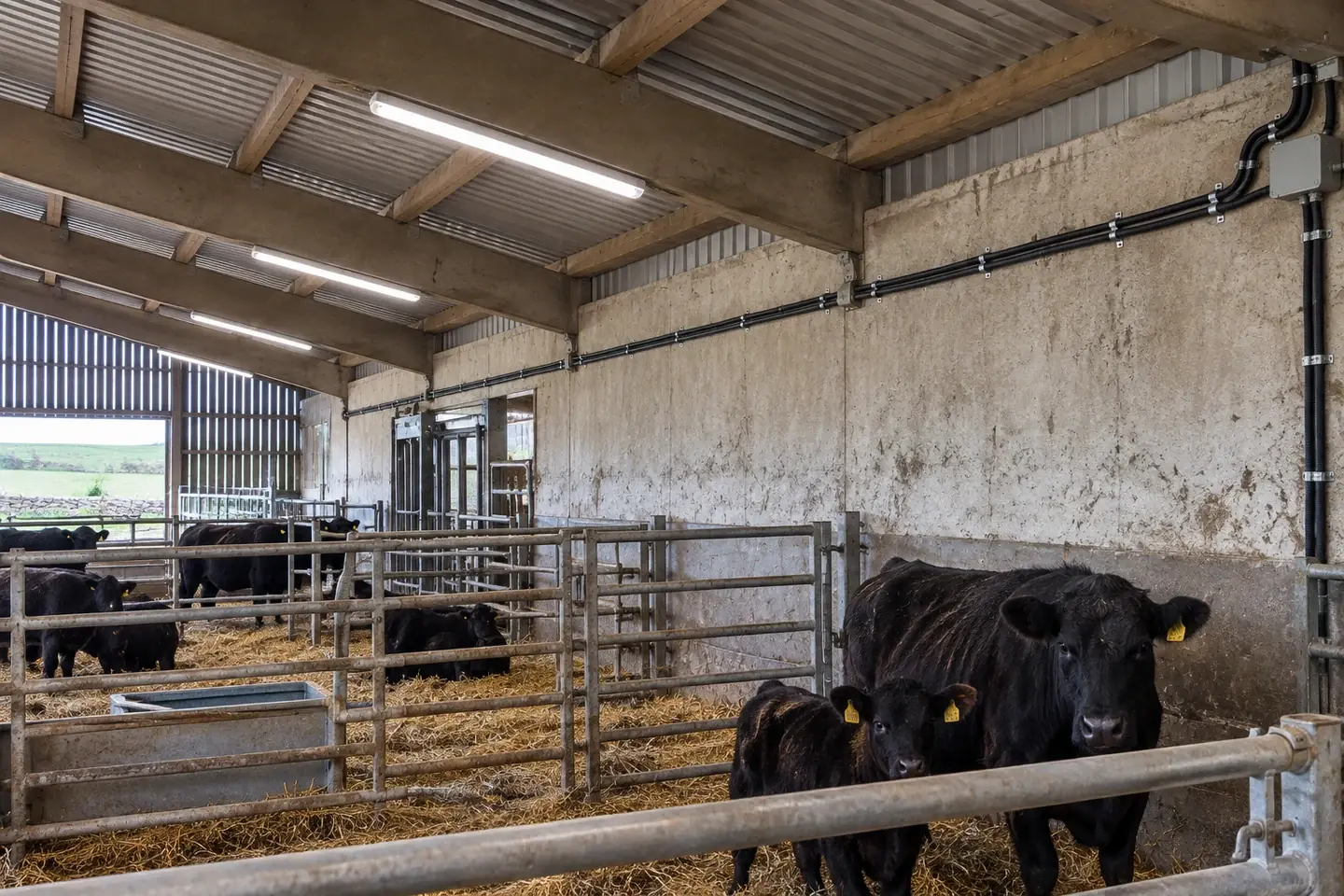
Any of the following is a reason to have the installation looked at before it is relied on for another season. What is repaired and what is replaced depends on what is found once the circuits are inspected and tested.
Rusted socket enclosures, cracked light fittings, split cable sheaths or exposed armour are signs the installation is losing the protection it was designed with. Damp and ammonia in livestock buildings can corrode metalwork much faster than in a house, so a fitting that looks tired may already be letting water in.
A dryer, pump or auger that trips the board when it starts can point to a motor, starter or supply fault, or to protection that is not suited to the load. Leave it isolated and describe what trips and when, rather than resetting it repeatedly.
Chewed cable insulation in stores, lofts and voids exposes live conductors and is a recognised cause of faults and fires in farm buildings. Any sign of gnawing on cables needs the circuit checked before it is used again.
Extension leads run across yards, adaptors stacked in a workshop and temporary cables that have become permanent are a fire and shock risk. HSE advises providing enough socket outlets to keep the use of extension leads to a minimum and not overloading sockets with adaptors.
Isolate anything damaged if it is safe to do so and describe what you have found to James.
Three kinds of farm electrical work, from shed lighting and sockets to 3-phase machinery supplies and emergency repairs.
Weatherproof IP-rated LED lighting, high-bay shed illumination, outdoor floodlighting, and IP66 socket enclosures for cattle sheds, grain stores, and workshops.
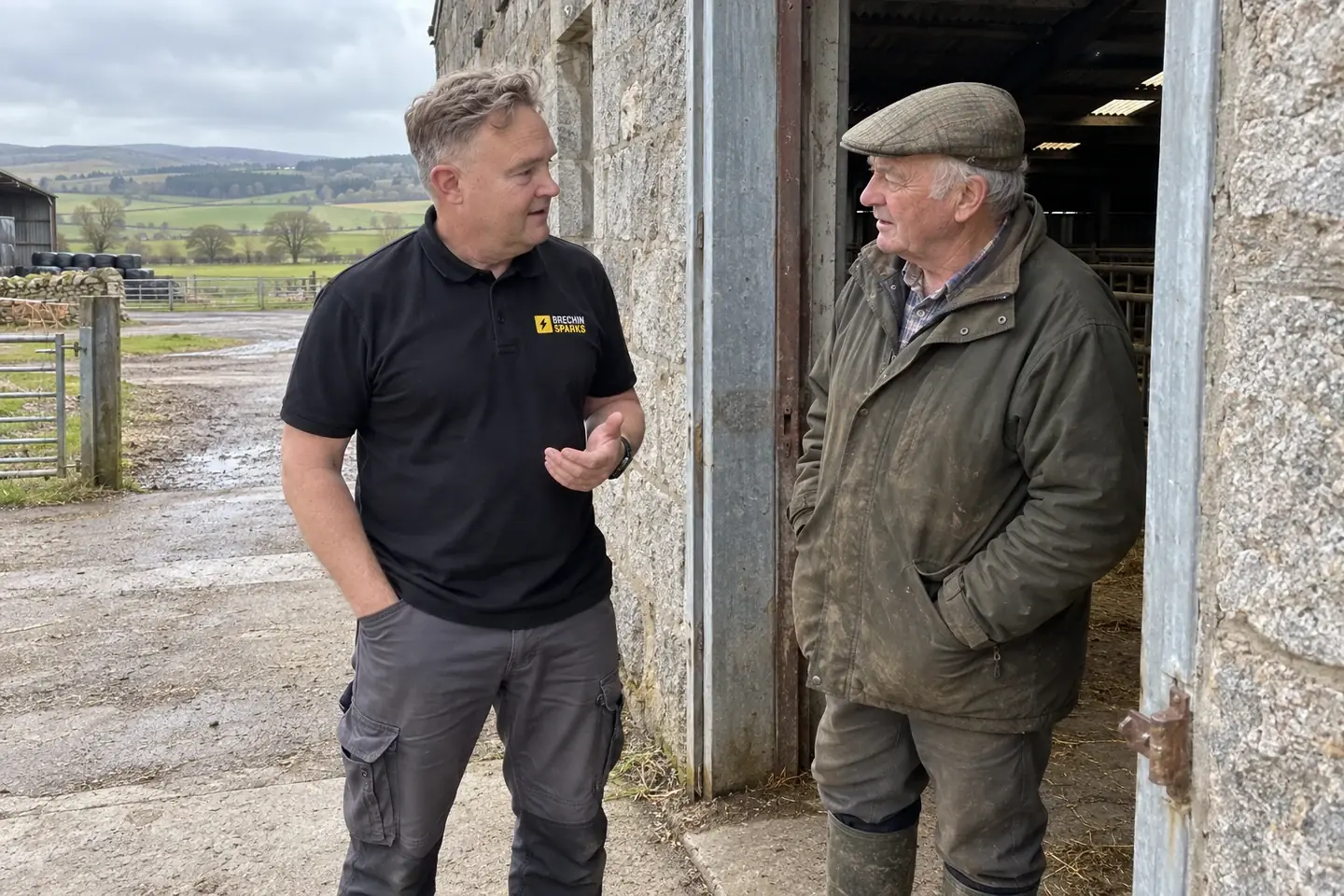
Installing 3-phase distribution boards, direct-on-line (DOL) motor starters, isolators, and heavy-duty supplies for grain dryers, slurry pumps, feed augers, and workshop machinery.
Locating ground faults, underground cable damage, broken armours, or damaged isolators quickly to restore essential power to agricultural operations.
Guide prices
Prices depend on the distance between buildings, the type of 3-phase equipment and access, and for a lighting package the shed height, number of fittings and cable run lengths. All costs are agreed before work begins.
Distance between buildings, 3-phase equipment type, access. Describe the machinery symptoms, building location, and urgency.
Shed height, number of fittings, cable run lengths. Quoted following an on-farm survey or site description.
Indicative guide prices. The final scope and cost are agreed before work begins.
See the full guide to electrical work prices for other jobs.
How the job runs
Whether it is a repair, a new supply or a lighting package, the job follows the same pattern, planned around the animals and the work of the farm to keep operational downtime to a minimum.
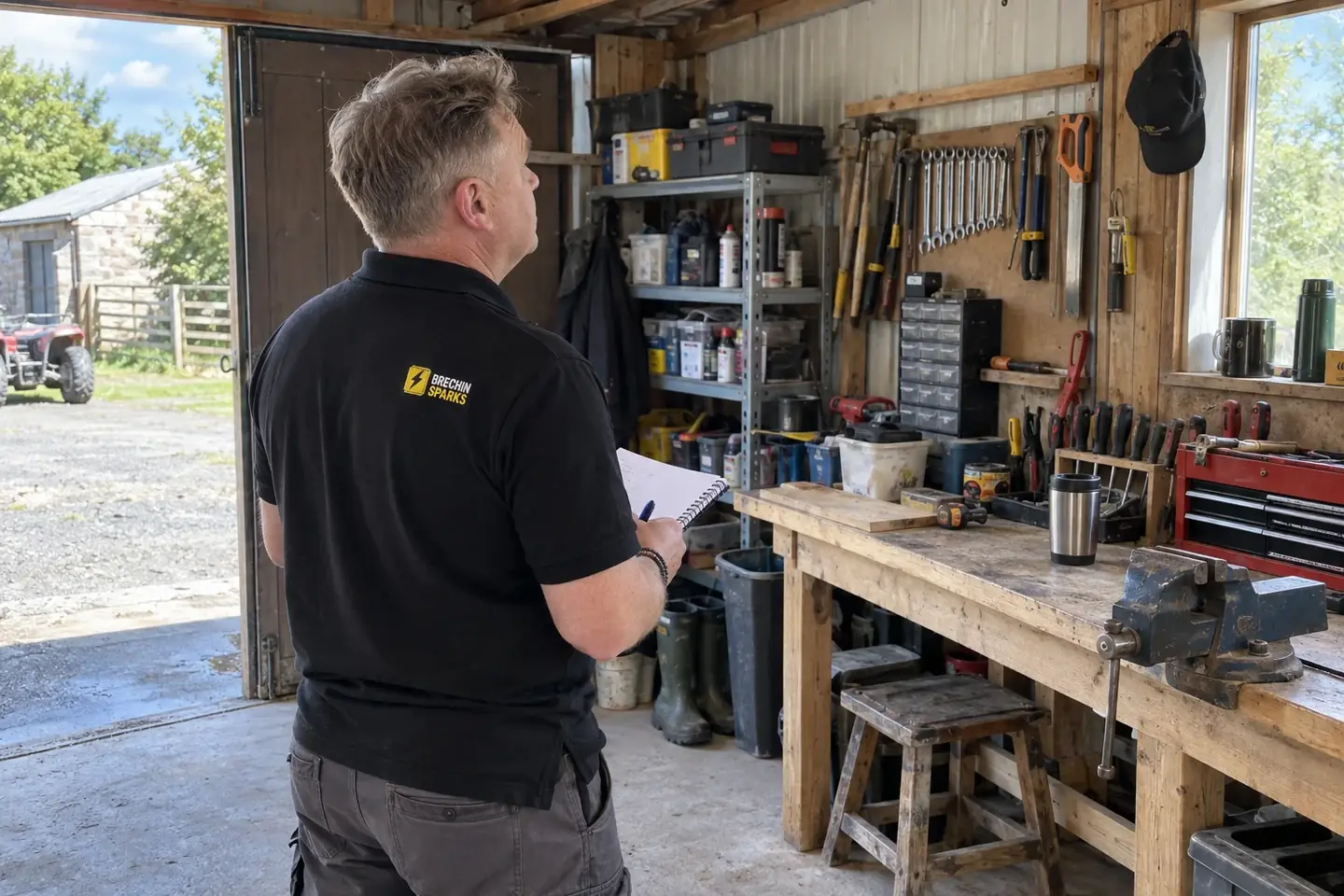
James walks the steading with you, sees which building each item is in, how it is reached and what has to keep running. Work is planned around livestock and your operation so that feeding, milking, drying or pumping is interrupted as little as possible.
The board, cable routes, isolators and fittings are inspected and the affected circuits tested, so that a fault is traced to its cause and any damage the environment has done is found before new work is connected to it.
Repairs are made or the new supply, starter, lighting or sockets installed using fittings suited to the building: IP-rated enclosures, armoured or protected cable and RCD protection where the conditions call for it.
Every circuit worked on is tested before it is put back into service, and the results are recorded on the certificate for the work.
You get the certificate, test results and any photographs, plus a note of anything seen on the walk-round that is not urgent but worth planning for, so the next job is not a surprise.
HSE’s farm electrical safety guidance is that installations are checked periodically and repairs carried out by a competent electrician. Read the HSE guidance on electricity on farms.
On completion
Paperwork for the farm file, and for an insurer or assurance scheme where they ask for it.
An Electrical Installation Certificate (EIC) for a new circuit, board or supply, or a Minor Electrical Installation Works Certificate for an addition or alteration to an existing circuit, confirming the work was tested to BS 7671. Any applicable building warrant or approved certification requirements are assessed separately.
Where a farm inspection is carried out rather than a repair or installation, the findings are recorded on an Electrical Installation Condition Report (EICR) with observations and limitations. An EICR records the condition of the installation; it is not a certificate for new work.
The test results for each circuit worked on and photographs of what was found and what was done, kept with the certificate where required by your insurer or scheme.
Based in Brechin, Angus, Scotland, covering the DD9 postcode area, the Angus towns and the farms and estates across Angus and the Mearns within an approximate 40-mile radius. Tell James how the steading is reached, as rural access and the distance between buildings affect the price.
From the town centre to Trinity and Cookston. Our base, so usually the quickest to arrange.
Farms, estates and agricultural businesses across the Angus towns and the land between them.
Livestock sheds, grain stores and workshops on farms in the glens and surrounding rural holdings.
Enquiries welcome for farms and rural businesses around the city.
Call with your postcode to check coverage within the approximate 40-mile service area.
Full list of towns on the areas covered page.
Regular inspection and testing is recommended, but there is no single interval set for farm buildings. HSE’s guidance is that installations are checked periodically and repairs carried out by a competent electrician, and that electrical equipment must be safe and properly maintained. Insurers and farm assurance schemes may ask for evidence of inspection, so check what yours requires. James inspects and tests the installation, records the findings and suggests when it should next be looked at. HSE: electricity on farms
Usually, yes. The work is planned around the animals and your operation: which pens are in use, when feeding and milking happen and what has to keep running, so that operational downtime is kept to a minimum. Where a circuit has to be isolated while stock are in the building, James agrees the timing with you first. Tell James whether livestock will be in the shed when you describe the job.
Fittings chosen for a wet, dusty, corrosive building: weatherproof IP-rated LED lighting, high-bay shed illumination, outdoor floodlighting and IP66 socket enclosures, with cables run in armoured cable, conduit or trunking and fixed out of reach of animals and machinery. Sockets in damp conditions are RCD-protected. The exact rating and route are chosen once James has seen the building and how it is cleaned.
Yes. Brechin Sparks installs 3-phase distribution boards, direct-on-line (DOL) motor starters, isolators and heavy-duty supplies for grain dryers, slurry pumps, feed augers and workshop machinery. Whether the existing supply to the farm can carry the new load is checked first, and any change to the incoming supply is discussed with you before the work is quoted. See Three-Phase Electrical Work for the detail.
Yes, subject to availability. Emergency calls are welcome 24/7, and farm safety repairs and emergency fault finding cover locating ground faults, underground cable damage, broken armours or damaged isolators quickly to restore essential power to agricultural operations. Call James with the building, the symptoms and what has stopped, and he will tell you when he can attend.
You get the certificate for the work carried out: an Electrical Installation Certificate or Minor Works Certificate for repairs and installations, or an Electrical Installation Condition Report where an inspection has been done, with the test results and photographs where required by your insurer or scheme. Whether a particular document satisfies your insurer or assurance scheme depends on what they ask for, so check their requirements and tell James so the right paperwork is prepared.
Describe the machinery symptoms, the building location and how urgent it is. Lighting packages are quoted following an on-farm survey or site description.
Call 01356 235858