Can I replace a light fitting myself?+
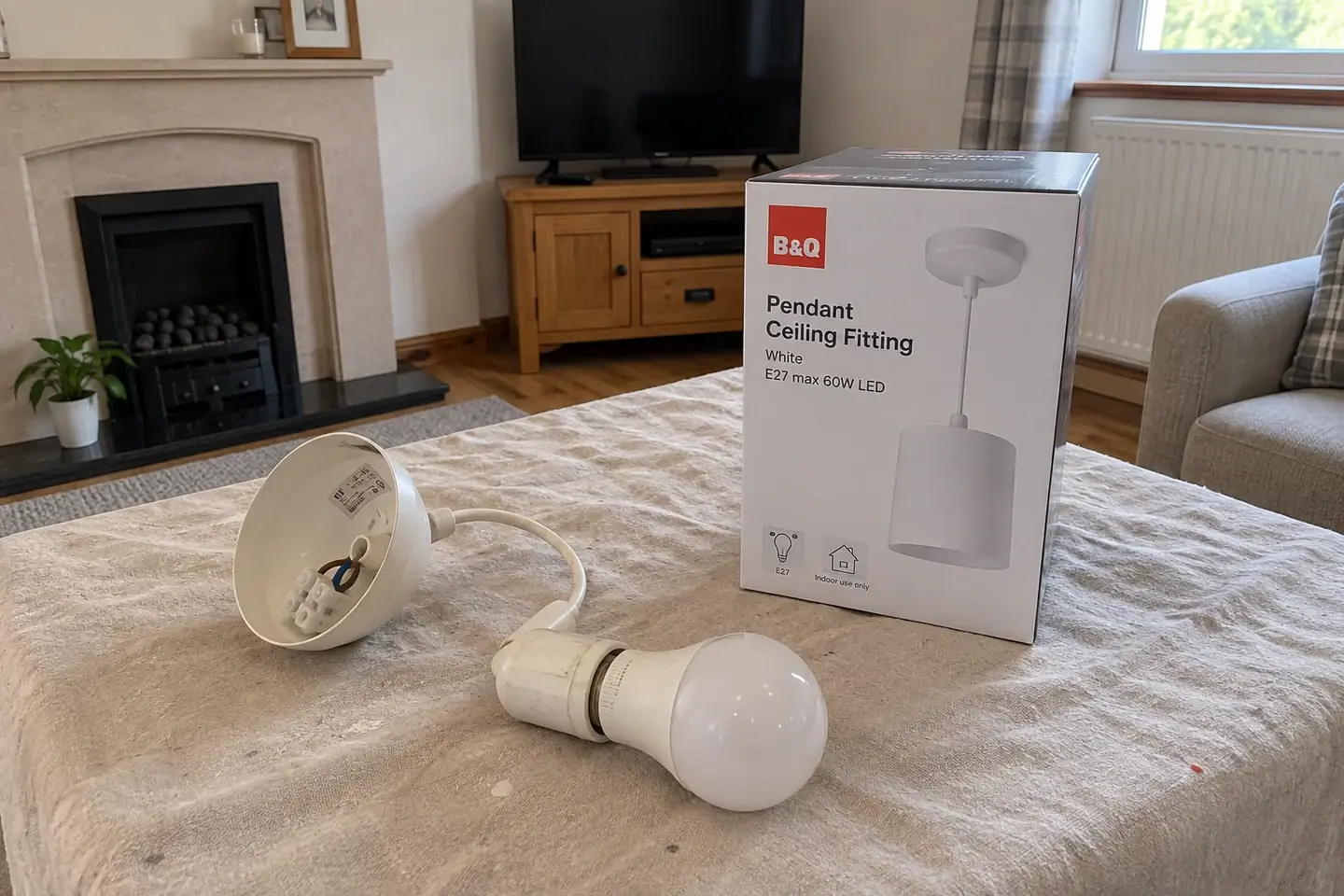
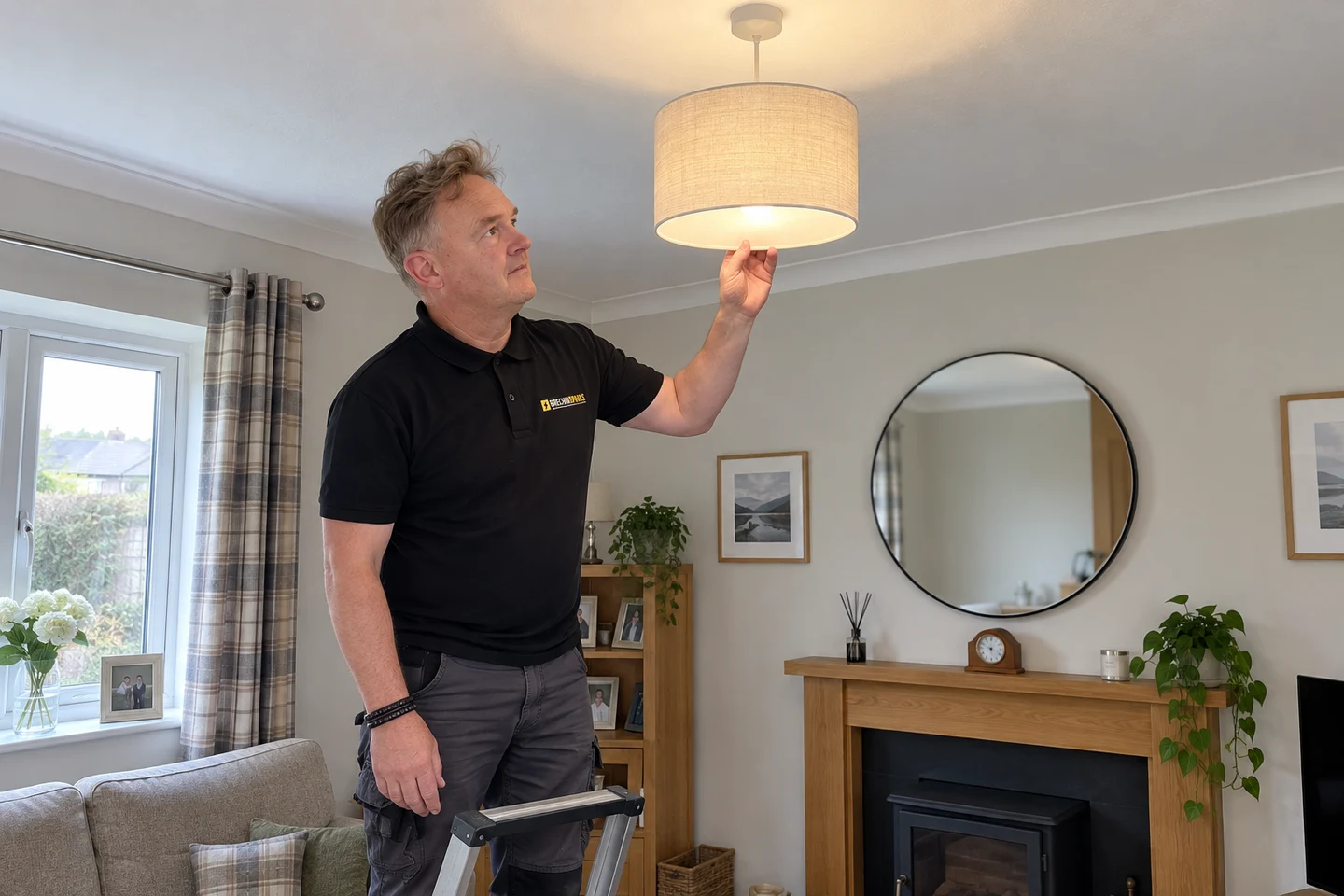
It is safest to have it done by an electrician. A light fitting sits on a live circuit, and a replacement means isolating the right circuit at the consumer unit and proving it dead, then identifying which conductors do what at the ceiling rose: older loop-in wiring can have several cables in the rose that are not marked the way a new fitting expects. If a fitting has already been changed and the lights behave oddly, or a switch stays live, have it checked. James replaces fittings as part of small electrical repairs and tests the circuit afterwards.
How many downlights does a room need?+
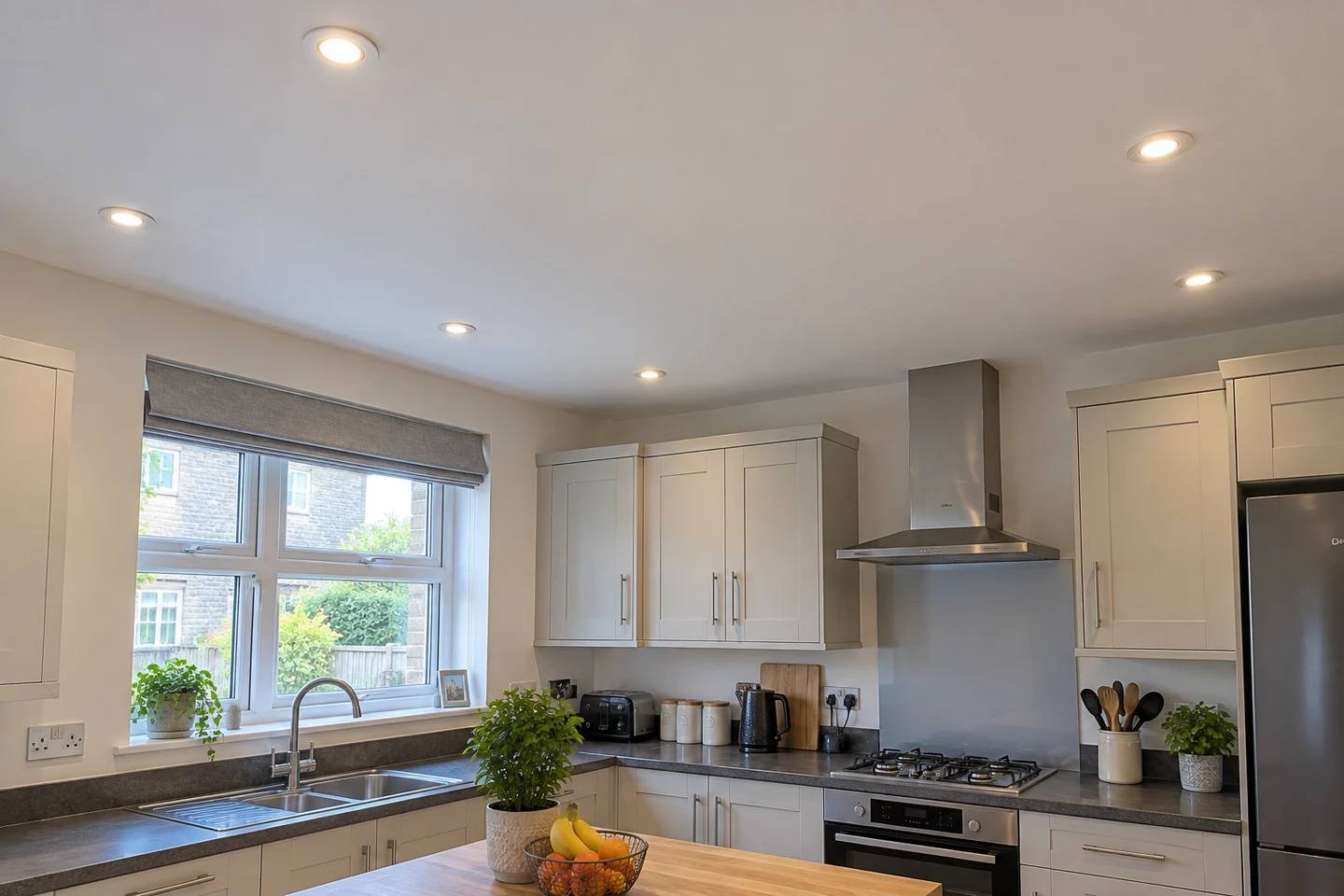
There is no fixed number. It depends on the size and shape of the room, the ceiling height, what the room is used for and whether the downlights are the only light source or work alongside pendants, wall lights or under-cabinet lighting. Kitchens usually want an even spread over the work areas; living rooms often want fewer, dimmable fittings. James plans the layout with you around joists and pipework before any holes are cut.
Can outdoor lights be added to an existing circuit?+
Sometimes, depending on the circuit and what is being added. A single porch or wall light can often be taken from a nearby lighting circuit if that circuit has the capacity and the right protection. A run of garden lights, a driveway or a floodlight some distance from the house is more usually put on its own circuit in armoured cable, protected for outdoor use. James checks the existing circuit and the route before recommending which.
What is the difference between IP-rated and standard fittings?+
The IP rating describes how well a fitting keeps out dust and water. The first digit covers solids such as dust, the second covers water, and a higher number means better protection. A standard indoor fitting has little or no protection against water and is not suitable outdoors or in a wet position. Outdoor lanterns and floodlights are typically rated IP65 or IP66. James picks the rating for the position: a sheltered porch and an exposed wall or ground-level fitting do not need the same thing.
Can you fit dimmers to LED lights?+
Usually, provided the lamps or fittings are dimmable and the dimmer is compatible with them. Not every LED lamp is dimmable, and a dimmer designed for older halogen or incandescent lamps can cause flicker, buzzing or a limited dimming range with LEDs. Where fittings run from a driver, the driver has to be dimmable too. James checks the fittings and specifies a matching dimmer, or advises on replacing lamps that will not dim.
Do outdoor security lights need a sensor or a switch?+
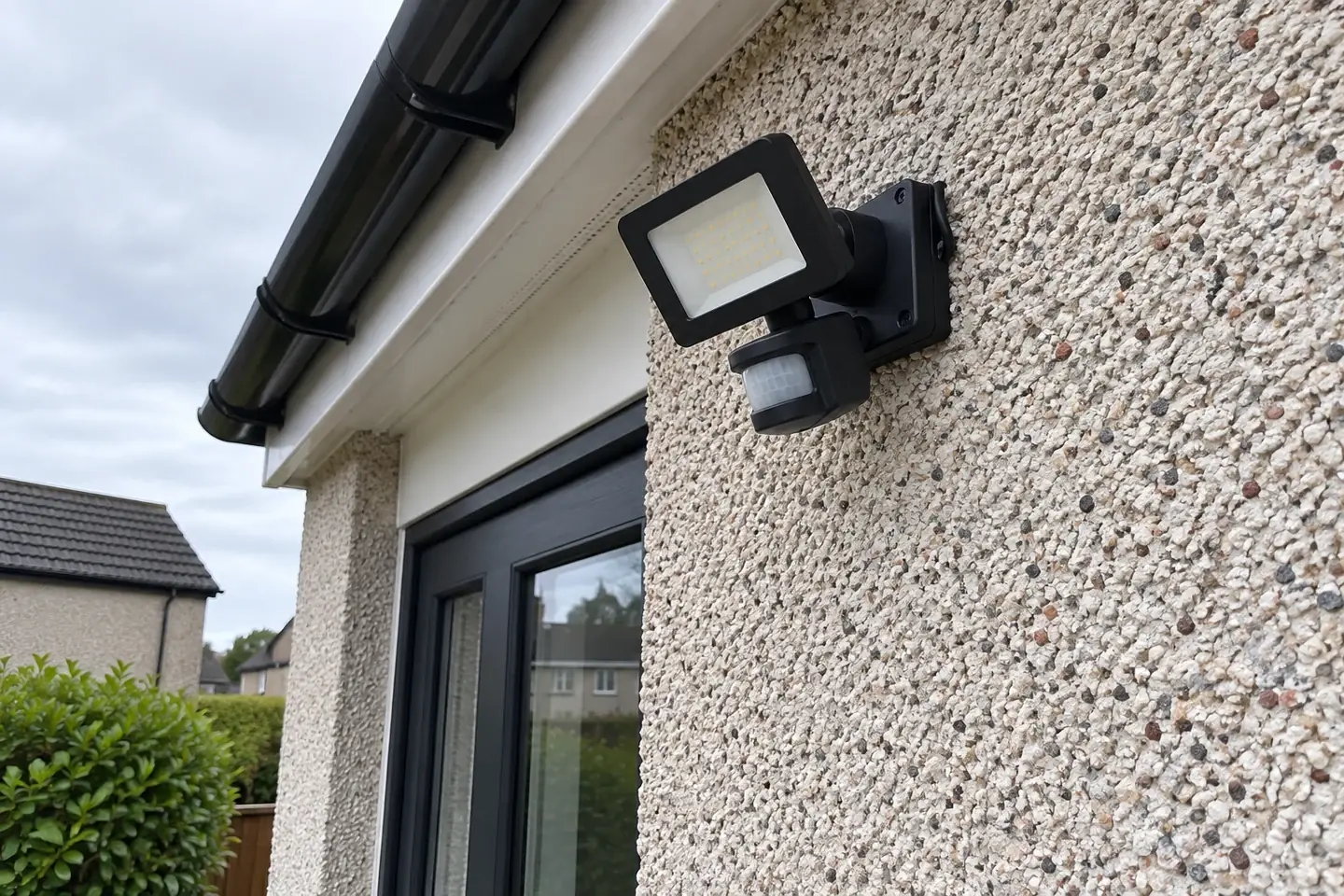
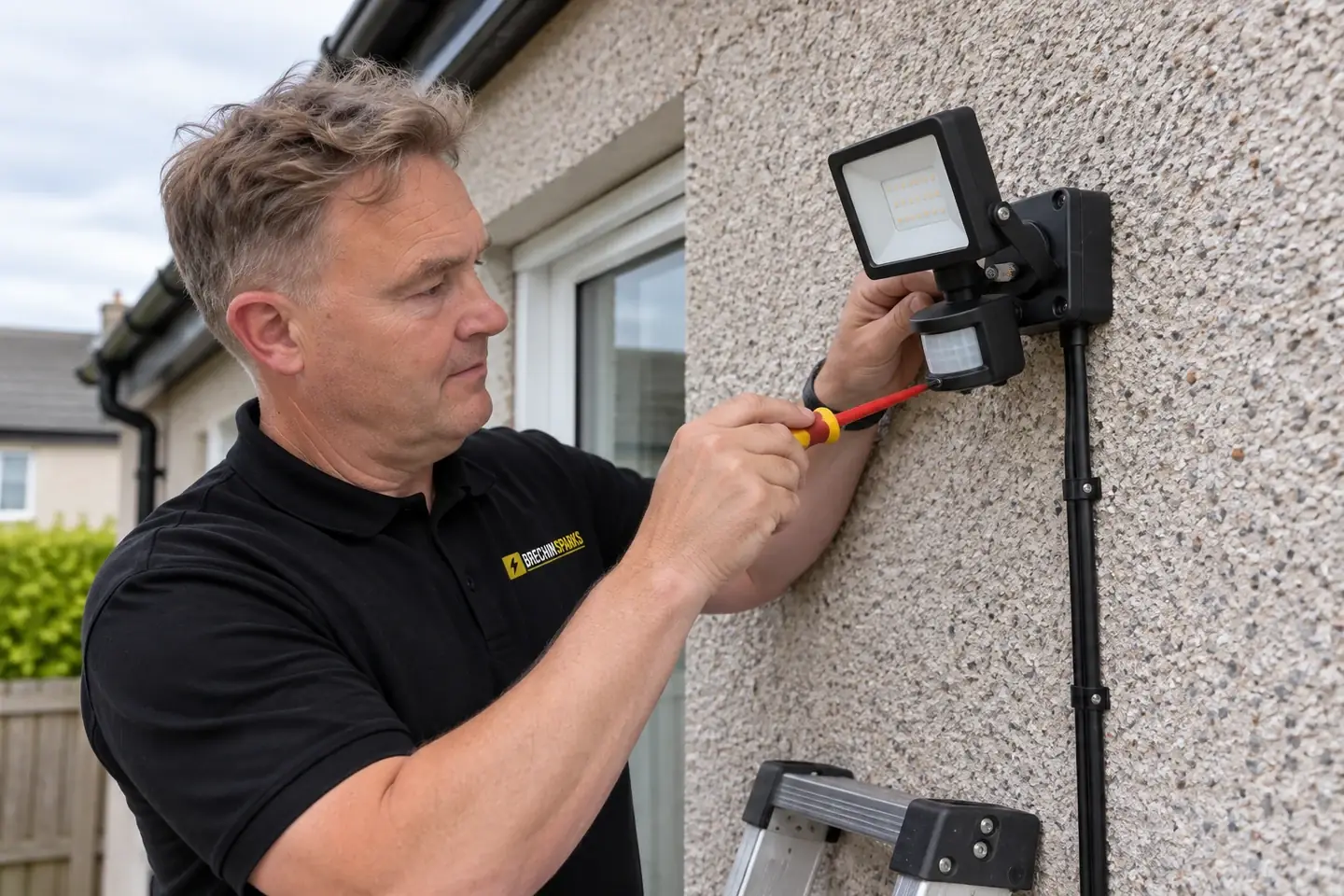
Either, or both. A PIR sensor switches the light on when it detects movement and off again after a set time, which suits a driveway or the approach to a door. A switched light gives you control from indoors and suits a patio or a garden you sit in. Many floodlights can be wired so a switch overrides the sensor, and timers, dusk-to-dawn photocells and smart controls are further options. James wires whichever arrangement you choose and sets the sensor range and timing for the position.